UEFA Away Goals Rule: Why It Was Removed and What Changed
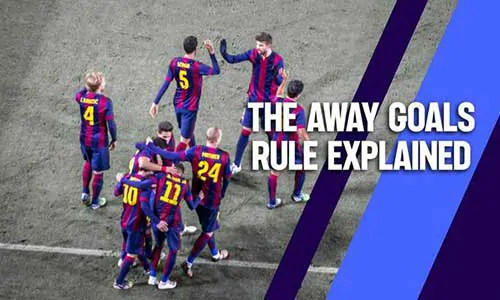
For over half a century, European football knockout matches were governed by a unique and highly tense tiebreaker rule. When teams finished level on aggregate after two legs, the side with more goals scored on opponent soil emerged victorious. However, in the summer of 2021, the governing body of European football made a historic decision to scrap this rule entirely. To fully understand this massive shift, we must analyze the UEFA Away Goals Rule: Why It Was Removed and What Changed in the modern landscape of elite club tournaments.
This paradigm shift has fundamentally transformed tactical preparation, team psychology, and the overall spectacle of European nights. In this comprehensive analysis, we will explore the historical context of the rule, the primary factors that led to its demise, and how its absence has reshaped modern football tactics.
Table of Contents
- 1. UEFA Away Goals Rule: Why It Was Removed and What Changed: The Historical Catalyst
- 2. Why It Was Removed: Analyzing the Primary Strategic Drivers
- 3. UEFA Away Goals Rule: Why It Was Removed and What Changed in Modern Tactical Systems
- 4. UEFA Away Goals Rule: Why It Was Removed and What Changed for Fan Engagement and Drama
- 5. Statistical Comparison: Before vs. After the Rule Change
- 6. Authoritative External Resources
- 7. Frequently Asked Questions (FAQ)
- 8. Conclusion and Future Outlook
1. UEFA Away Goals Rule: Why It Was Removed and What Changed: The Historical Catalyst
To truly appreciate the seismic shift of 2021, one must step back to 1965. When UEFA first introduced the rule in the European Cup Winners’ Cup, continental football was vastly different. Travel was slow, exhausting, and logistically challenging, often requiring multi-day journeys across borders.
Pitches during the mid-20th century were unpredictable and often poorly maintained. Furthermore, the absence of standardized balls, stadium lighting, and uniform refereeing made playing away a daunting prospect. Hostile local crowds added a layer of intimidation that modern players rarely face in identical measure.
In this hostile environment, away teams had a singular, overwhelmingly defensive objective: “park the bus” and escape with a minimal defeat or a goalless draw. This ultra-conservative approach made early European matches sterile and defensive affairs. To combat this, the UEFA away goals rule was implemented as an artificial incentive.
The logic was elegant: by making an away goal count “double” in the event of an aggregate draw, visiting teams were strongly encouraged to attack. It completely transformed the tactical calculus, injecting drama and reward into courageous offensive play on enemy territory.
For decades, the UEFA away goals rule delivered some of the most iconic, nerve-shredding moments in sports history. A single late goal could swing the qualification requirements from impossible to accomplished in a fraction of a second. However, as the global game evolved, the foundations upon which the rule was built began to erode.
2. Why It Was Removed: Analyzing the Primary Strategic Drivers
In June 2021, the UEFA Executive Committee announced the official abolition of the rule across all club competitions. This historic decision was not made overnight; it was the culmination of years of debate, statistical analysis, and direct feedback from the UEFA Club Competitions Committee.
So, what exactly motivated this massive structural change? The answer lies in how modern football has neutralized the traditional difficulties of traveling. Let us break down the primary drivers behind this historic regulatory shift.
The Collapse of the Traditional “Home Advantage”
In 1965, playing at home offered an immense statistical advantage. However, over the decades, the gap between home and away wins narrowed significantly. Modern infrastructure, chartered private flights, standardized Five-Star hotels, and elite athletic preparation have virtually eliminated the physical fatigue of travel.
Furthermore, pitch quality has become standardized globally. UEFA’s strict regulations ensure that pitch dimensions, grass height, and moisture levels are remarkably consistent, whether playing in London, Madrid, or Munich. Because the physical differences between home and away environments have minimized, the justification for a heavy away goal advantage has also faded.
The Paradoxical Rise of Defensive Home Tactics
While the UEFA away goals rule was designed to encourage away teams to attack, in the modern era, it had the opposite effect on home teams. Managers hosting the first leg of a knockout tie became paralyzingly terrified of conceding an away goal. A 1-1 home draw was often perceived as a disastrous result, worse than a 0-0 draw.
Consequently, home teams routinely adopted ultra-defensive strategies during the first leg. They prioritized clean sheets over attacking, leading to dull, cagey, and overly tactical first-leg matches. By removing the rule, UEFA sought to liberate home teams, allowing them to play open, attacking football without the crushing fear of a single defensive lapse proving fatal.
Inherent Unfairness in Extra Time
Another major structural flaw of the old system was highlighted during matches that went to extra time in the second leg. If the tie was deadlocked after 180 minutes, an additional 30 minutes of extra time was played. Under the old rules, the away goals rule remained active during this extra period.
This created a massive, unfair advantage for the visiting team. If the away team scored during extra time, the home team was suddenly forced to score twice to progress, as a draw would favor the visitors. Although the home team had the advantage of playing on their own pitch for an extra 30 minutes, the weight of the away goal rule heavily skewed the competitive balance in favor of the visitors.
3. UEFA Away Goals Rule: Why It Was Removed and What Changed in Modern Tactical Systems
Following the abolition of the rule, elite tacticians were forced to completely rewrite their game plans. The tactical shift across the UEFA Champions League, Europa League, and Conference League was immediate and profound.
Let us explore the tactical reality of the UEFA Away Goals Rule: Why It Was Removed and What Changed on the pitch, highlighting how modern coaches like Pep Guardiola and Carlo Ancelotti approach these high-stakes fixtures today.
A Resurgence in First-Leg Attacking Intent
The most noticeable change in the post-away goals era is the mentality of the home team in the first leg. Free from the psychological burden of the away goal penalty, home teams now attack with far greater freedom. Scoring three goals while conceding two is no longer viewed as a dangerous vulnerability; it is a straightforward victory.
This shift has led to highly entertaining, high-scoring first-leg encounters. Teams are much more willing to take calculated risks, commit bodies forward, and engage in high-pressing styles. The cautious, slow-tempo chess matches that historically dominated first legs have largely been replaced by dynamic, end-to-end spectacles.
The Evolution of Second-Leg Match Dynamics
In the past, a team leading 2-0 from the first leg could travel away and play with extreme pragmatism. If they managed to score just one away goal, the tie was effectively put out of reach, forcing the home team to score four. Today, that mathematical buffer no longer exists.
Now, a 2-0 aggregate lead remains exactly that: a two-goal lead. Away teams can no longer rely on a single defensive breakdown or counter-attack to mathematically crush the opposition. This has forced coaches to maintain structured, active tactical frameworks rather than simply relying on defensive block strategies.
The Surge in Extra Time and Penalty Shootouts
Predictably, removing the primary tiebreaker has naturally resulted in more matches finishing level on aggregate. When the final whistle blows at the end of the second leg, if the score is tied, the match proceeds directly to extra time and, if necessary, a penalty shootout.
This has increased the physical and mental demands placed on elite players. Squad depth, conditioning, and preparation for penalty shootouts have become critical strategic priorities for top-tier clubs. Coaches must manage their substitutions carefully, keeping in mind the highly realistic prospect of an additional 30 minutes of high-intensity play.
4. UEFA Away Goals Rule: Why It Was Removed and What Changed for Fan Engagement and Drama
Football is ultimately an entertainment industry, and fan sentiment regarding this rule change remains highly divided. The UEFA away goals rule was deeply woven into the cultural fabric of European football nights, giving rise to legendary comeback narratives.
Let us analyze the emotional and entertainment impact of the UEFA Away Goals Rule: Why It Was Removed and What Changed for the millions of spectators who tune in to these dramatic fixtures.
The Loss of the “Away Goal” Mathematical Climax
For many traditionalists, the unique beauty of the UEFA away goals rule lay in its capacity to instantly turn a tie on its head. A single goal from a visiting team in the dying minutes could instantly transform a comfortable aggregate lead into sudden elimination. This produced a unique, heart-stopping tension that is difficult to replicate under standard rules.
Classic nights, such as Tottenham’s dramatic semi-final comeback against Ajax in 2019 or Roma’s legendary triumph over Barcelona in 2018, were defined entirely by the mathematical weight of the away goals rule. For these fans, the sport has lost a layer of its historical charm and unpredictability.
The Appeal of Pure Sporting Simplicity
Conversely, a vast portion of modern fans and neutral observers welcome the simplicity of the current system. Under the old rules, explaining the competitive math to casual viewers was often convoluted. An aggregate score of 3-3 did not mean a draw; it meant one team had won, which often felt counter-intuitive to sporting merit.
Now, the rules are perfectly aligned with sporting logic: the team that scores more goals over the course of 180 minutes wins the tie. If the scores are level, the match is decided on the pitch through extra play and penalties, rather than through historical location-based statistics. This simplicity has democratized the viewing experience and eliminated structural ambiguity.
5. Statistical Comparison: Before vs. After the Rule Change
To fully grasp the tangible outcomes of this regulatory overhaul, it is helpful to look at a direct comparative breakdown of how the old and new systems operate in key tactical scenarios.
As this comparison illustrates, the removal of the UEFA away goals rule has successfully addressed the tactical imbalances of the past, albeit at the expense of the unique mathematical drama that once characterized the Champions League knockout stages.
6. Authoritative External Resources
For those interested in exploring the official statistics, direct administrative statements, and deep dive historical contexts, we highly recommend reviewing the following reputable sources:
- To read the official administrative press release and the detailed reasoning of the executive committee, visit the UEFA Official Website.
- For comprehensive matchday archives, tactical expert panels, and retro highlights of historical away-goal fixtures, check out BBC Sport.
7. Frequently Asked Questions (FAQ)
Q1: When did UEFA officially remove the away goals rule?
UEFA officially abolished the away goals rule ahead of the 2021/22 European club season. The decision applied to all major continental club tournaments, including the UEFA Champions League, UEFA Europa League, and the newly established UEFA Conference League.
Q2: What happens now if the aggregate score is tied after two legs?
If the aggregate score is level at the end of normal time in the second leg, the match immediately goes into 30 minutes of extra time (divided into two 15-minute halves). If the score remains tied at the end of extra time, the winner is decided by a penalty shootout.
Q3: Why was the away goals rule considered unfair during extra time?
Under the old rules, if the visiting team scored in extra time, that goal still carried the “away goal” weight. This meant the home team had to score twice to progress. This structural dynamic was considered highly unfair to the second-leg host team, despite having the physical advantage of playing at home.
Q4: Did removing the rule result in more boring or defensive matches?
Generally, the opposite occurred. Removing the rule has encouraged home teams in the first leg to play more expansive, attacking football, as they are no longer terrified of conceding a fatal away goal. However, it has also led to more matches proceeding to conservative extra time periods as teams look to avoid mistakes late in the tie.
Q5: Is the away goals rule still used in domestic cup competitions?
Most domestic cup competitions globally have followed UEFA’s lead and abolished the rule. For instance, the English EFL Cup (Carabao Cup) and major South American CONMEBOL competitions (like the Copa Libertadores) have also removed the away goals tiebreaker to align with modern football standards.
Q6: How did elite managers react to the removal of the rule?
The majority of elite managers, including Pep Guardiola, Diego Simeone, and former Arsenal manager Arsene Wenger, strongly supported the change. They argued that the physical, technological, and tactical evolution of the modern game made the 1960s rule anachronistic and structurally flawed.
8. Conclusion and Future Outlook
The decision to retire the UEFA away goals rule marks one of the most significant regulatory developments in modern football history. By removing an archaic rule designed for a bygone era, UEFA successfully adapted the modern game to its current physical and technological reality.
While some purists will always miss the chaotic, calculation-heavy mathematical drama of classical European nights, the modern era has benefited from pure sporting merit. Ties are now decided by honest, direct goal scoring, and first legs have been liberated from the shackles of hyper-defensive caution.
As football continues to evolve, the balance between player welfare, entertainment value, and competitive fairness will remain a central point of debate. What remains clear is that the beautiful game is more open, direct, and transparent than it has been in decades.
What are your thoughts on this historic rule change? Do you prefer the pure sporting simplicity of the modern system, or do you miss the high-stakes mathematical drama of the classic away goals rule? Let us know your thoughts in the comments section below, and share this article with your fellow football enthusiasts!