Offside Rule Explained: A Beginner’s Guide to Football’s Most Confusing Law
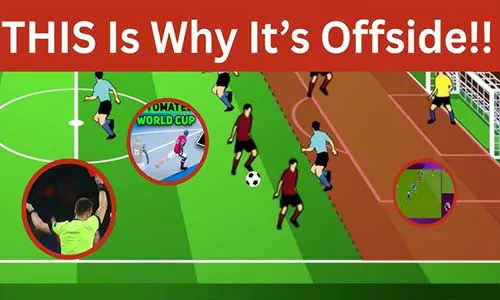
Table of Contents
- Introduction to Law 11
- The Core Concept of the Offside Rule
- The Three Elements of an Offside Position
- When Is the Penalty Triggered?
- Active Play vs. Passive Position
- Deliberate Play vs. Deflections
- Exceptions to the Offside Rule
- Tactical Implications of Law 11
- The Role of Assistant Referees and VAR
- Quick Reference: Offside Scenarios Table
- Frequently Asked Questions (FAQ)
- Conclusion
Have you ever sat down to enjoy a thrilling football match, only to be completely baffled when the assistant referee raises their flag and halts an exciting attack? You are certainly not alone in this experience. Football, known globally as the beautiful game, has a set of rules designed to keep play fair, balanced, and dynamic. However, one specific regulation continues to spark intense debates in pubs, stadiums, and television studios worldwide. To help you fully grasp this crucial concept, we present the ultimate guide: Offside Rule Explained: A Beginner’s Guide to Football’s Most Confusing Law.
Furthermore, understanding this rule is not just for players and referees on the pitch. As a passionate fan, knowing the nuances of Law 11 will dramatically enhance your viewing experience. You will no longer feel lost when a spectacular goal is suddenly disallowed after a lengthy video review. Therefore, let us dive deep into the mechanics of this famous rule and break down its complexities into simple, digestible pieces.
Indeed, while it may seem overly technical at first glance, the rule operates on a few straightforward principles. Once you understand the underlying logic, you will see how it shapes the entire tactical landscape of modern football. Consequently, you will be able to analyze matches with the precision of a seasoned pundit.
The Core Concept – Offside Rule Explained: A Beginner’s Guide to Football’s Most Confusing Law
To start, we must address the fundamental reason this rule exists in the first place. Historically, in the early days of association football, players would simply stand near the opponent’s goal and wait for a long pass to arrive. This practice, often referred to as “goal-hanging” or “cherry-picking,” resulted in uncoordinated, boring matches. Consequently, the game’s early lawmakers decided that some form of restriction was necessary to encourage team passing, tactical movement, and spatial awareness.
In simple terms, a player cannot simply camp out in front of the opponent’s net. Instead, they must work with their teammates to break down the defensive line using skill, speed, and clever passing. Therefore, the offside rule encourages a more strategic and fluid style of play. Indeed, without it, modern football as we know it would cease to exist, turning into a simple kicking contest from one end of the pitch to the other.
On the other hand, the rule is not designed to punish attacking intent. It is a balancing act. It allows attackers to run behind defenses as long as they time their movements perfectly. Specifically, it rewards intelligent movement and punishes lazy positioning, making the battle between strikers and defenders one of the most exciting aspects of the sport.
The Three Elements of an Offside Position
Before we examine when an infraction is actually called, we must make a vital distinction. There is a major difference between being in an “offside position” and committing an “offside offense.” It is essential to note that merely standing in an offside position is not a violation of the rules. To be considered in an offside position, an attacking player must meet three specific criteria simultaneously.
These elements are evaluated at the exact microsecond the ball is played or touched by a teammate, rather than when the player receives the ball. Let us break down these three conditions in detail.
1. Inside the Opponent’s Half
First, the attacking player must be in the opponent’s half of the field of play. The halfway line itself is neutral territory. Consequently, if a player is standing exactly on the line or inside their own defensive half when the ball is kicked, they cannot be ruled offside, regardless of where the defenders are standing.
This rule allows teams to execute fast counter-attacks. For instance, if a defending team pushes all their players forward for a corner kick, an attacking forward can wait right at the halfway line. As long as they do not cross that line before the ball is kicked, they are completely safe from any offside penalty.
2. Ahead of the Ball
Second, the player must be closer to the opponents’ goal line than the ball itself. If a teammate passes the ball backward or sideways, the receiver is inherently onside. Therefore, as long as the player remains behind or level with the ball at the exact moment it is passed, no infraction can occur.
This is why you often see two attackers running toward an empty goal together. The player with the ball can pass to their teammate, but only if the teammate is level with or behind the ball when the pass is released. If the teammate runs ahead of the ball before the pass, they will be ruled offside.
3. Relative to the Second-Last Opponent
Third, the attacking player must be closer to the opponents’ goal line than the second-last opponent. In almost all typical game situations, the opposing goalkeeper is the last opponent, meaning the “second-last opponent” is the last outfield defender. However, this is not always the case.
Specifically, if the goalkeeper runs up the pitch during a late-game corner kick, the rule remains identical. The attacker must still have at least two defending opponents (which could be two field players) between themselves and the goal line. This is a common source of confusion for beginners, but remembering the term “second-last opponent” instead of “last defender” will keep you ahead of the curve.
Furthermore, we must clarify which parts of the body count toward this position. According to the official International Football Association Board (IFAB) laws, any part of the head, torso, or feet that is closer to the opponent’s goal line than the second-last defender is considered offside. On the other hand, the hands and arms of all players (including goalkeepers) are completely excluded from this calculation. The boundary of the arm starts at the bottom of the armpit, meaning a player’s hand cannot make them offside.
When Is the Penalty Triggered? Offside Rule Explained: A Beginner’s Guide to Football’s Most Confusing Law
Now that we have established the physical and spatial requirements of the position, let us explore how an actual offense is committed. An offside offense is only whistled if a player in an offside position becomes actively involved in the play. This assessment is made at the exact instant the ball is played or touched by a teammate.
In addition, the rule breaks active involvement down into three distinct categories. Let us look at each of these in detail to understand how referees apply them on the pitch in real-time.
Active Play vs. Passive Position
A player can stand in an offside position for an entire match without ever committing an offense, provided they remain passive. For example, if a winger is standing in an offside position on the far left side of the pitch, but the midfielder passes the ball to a striker on the right side who was onside, no infraction is called. The referee will simply let play continue because the offside winger did not influence the active play.
However, the moment that passive player attempts to interact with the game, the assistant referee will raise their flag. Consequently, understanding the transition from passive to active is crucial for both players and fans alike.
Interfering with Play
This is the most straightforward scenario. Interfering with play occurs when a player physically touches or plays the ball after it has been passed or touched by a teammate. For instance, if a midfielder plays a through ball to a forward who was standing in an offside position, and that forward touches the ball, the assistant referee will immediately whistle for an offside offense.
Interfering with an Opponent
A player does not necessarily have to touch the ball to commit an offense. They can also be penalized for interfering with an opponent. This happens when an attacker prevents a defender or goalkeeper from playing the ball or making a fair defensive action.
Specifically, this includes:
- Physically challenging an opponent for the possession of the ball.
- Clearly obstructing an opponent’s line of vision so they cannot see the ball.
- Making a physical gesture or sudden movement which actively distracts, challenges, or deceives an nearby defender.
For example, if an offside attacker stands directly in front of the goalkeeper, blocking their view of a long-range shot, the goal will be disallowed, even if the attacker never touched the ball. This is because the attacker’s position directly interfered with the goalkeeper’s ability to save the shot.
Gaining an Advantage
The final category of active involvement involves gaining an advantage from an offside position. This occurs when an attacker plays a ball that has rebounded off the goalpost, the crossbar, or an opponent.
Similarly, if an attacker stands in an offside position, and a teammate takes a powerful shot that strikes the post and bounces directly to the attacker’s feet, they cannot simply score. Because they were in an offside position when the original shot was taken, they are judged to have gained an unfair advantage from that position. Consequently, the referee will award an indirect free kick to the defending team.
Deliberate Play vs. Deflections
One of the most complex areas of the offside rule is the distinction between a deflection and a “deliberate play” by a defender. In recent years, the International Football Association Board (IFAB) has issued clarified guidelines to help referees make consistent decisions on this matter.
Specifically, if a defending player makes a conscious, controlled physical movement to play the ball (such as an intentional pass or a controlled clearance), but misplaces it so that it goes directly to an offside attacker, the attacker is not penalized. The deliberate action of the defender effectively “resets” the offside phase, making the attacker’s position perfectly legal.
On the other hand, if the ball simply deflects off a defender who was lunging desperately, or if it strikes a defender who had no time to react, this is considered a deflection. In this scenario, the offside phase is not reset. Therefore, if the ball reaches an attacker who was in an offside position when the original pass was made, they will be penalized for gaining an advantage.
As a result, referees must analyze the defender’s body language. They must decide if the defender had full control of their body and had time to coordinate their movement. If they did, it is a deliberate play; if they did not, it is a deflection.
Exceptions to the Offside Rule
To make things even more interesting, there are three distinct restarts of play where the offside rule is temporarily suspended. In these specific scenarios, an attacking player can receive the ball directly without any fear of being called offside, regardless of where they are standing on the pitch.
These exceptions are vital tools for tactical planning, and teams often design specific set-piece routines to exploit them.
1. The Throw-In
First, a player cannot be offside if they receive the ball directly from a throw-in. Consequently, teams often use this exception to throw the ball deep down the wings into spaces behind the defensive line where defenders cannot easily mark them without leaving gaps in the center.
2. The Corner Kick
Second, there is no offside offense if a player receives the ball directly from a corner kick. Because a corner kick is taken from the corner of the pitch, the ball is naturally level with or ahead of all attacking players. Nevertheless, even if an attacker stood right on the goal line next to the goalkeeper, they would remain completely onside during the initial delivery.
3. The Goal Kick
Third, an attacker cannot be ruled offside if they receive the ball directly from a goal kick. This exception allows strikers to stand deep inside the opponent’s half when their goalkeeper is taking a long goal kick. This forces the defending team to drop deeper, stretching the field of play and creating more space in the midfield.
Why the Offside Rule Explained: A Beginner’s Guide to Football’s Most Confusing Law is Crucial for Tactics
Without a doubt, the offside law completely shapes how football is played on a tactical level. Coaches spend countless hours on the training ground organizing their defensive lines to exploit this rule. The most famous defensive tactic derived from this law is the “offside trap.”
To execute the offside trap, the entire defensive line must move forward in unison just before an opposing midfielder passes the ball. By doing so, they deliberately leave the attacking players standing behind them in an offside position. While this tactic can be highly effective, it is also incredibly risky. If even one defender fails to step up in time, the attacker will be kept onside, resulting in a clear run toward the goal.
Furthermore, attackers use various movement patterns to bypass these traps. Strikers will often run diagonally or “bend” their runs, starting from an onside position and timing their acceleration to meet the ball just as it passes the last defender. This constant game of cat-and-mouse between attackers and defenders is one of the most intellectually engaging aspects of modern football tactics.
Historically, the evolution of this rule has also changed the physical profile of players. When the rule was adjusted in 1925 to require only two defending players instead of three, goal-scoring increased dramatically. Consequently, defenders had to become faster and more tactically disciplined, leading to the development of the modern back-four defensive system.
The Role of Assistant Referees and VAR
Traditionally, making offside calls fell entirely on the shoulders of the assistant referees, commonly known as linesmen. These officials run along the touchline, constantly keeping themselves perfectly level with the second-last defender. It is an incredibly demanding task, as they must watch the passer and the receiver simultaneously to make split-second decisions.
However, in recent years, technology has transformed how these decisions are handled. The introduction of the Video Assistant Referee (VAR) has brought unprecedented precision to the game. When a goal is scored, VAR officials review the play using multiple high-definition camera angles and calibrated computer lines.
In addition, modern elite tournaments now utilize semi-automated offside technology. This system uses dedicated cameras and tracking chips inside the match ball to determine offside positions with millimeter accuracy. While this has significantly reduced human error, it has also sparked debate among fans who feel that ultra-precise, marginal calls can disrupt the emotional flow of the game. For official details on how these technologies are integrated into international competitions, you can consult the official FIFA resources.
Quick Reference: Offside Scenarios Table
To help you quickly visualize how these rules apply in real-game situations, we have compiled a handy reference table below. You can refer to this whenever you are watching a match and want to double-check a decision.
| Scenario | Offside? | Explanation |
|---|---|---|
| Attacker is level with the second-last defender when the ball is kicked. | No | Being perfectly level with the defender means the attacker is in an onside position. |
| Attacker receives the ball directly from a throw-in. | No | The offside rule does not apply to direct throw-ins. |
| Attacker stands in an offside position but does not touch the ball or block any opponent. | No | Merely standing in an offside position is not an offense; active involvement is required. |
| Attacker is ahead of the second-last defender but behind the ball when passed. | No | A player behind the ball at the moment of the pass is always onside. |
| Defender intentionally passes the ball back, but an offside attacker intercepts it. | No | A deliberate play by a defender resets the offside phase, making the attacker eligible. |
| Attacker runs from their own half to collect a long ball played over the defenders. | No | Since the attacker was in their own half when the ball was kicked, they are onside. |
Frequently Asked Questions (FAQ)
Let us address some of the most common questions that fans and new players ask about Law 11.
Q1: Can a player be offside in their own half?
No. A player must be entirely in the opponent’s half of the pitch to be considered in an offside position. Even if they are ahead of all defenders, starting a run from their own half is completely legal.
Q2: Can you be offside from a backward pass?
No. By definition, a player must be closer to the goal line than the ball to be offside. If the ball is passed backward or sideways, the receiver is behind or level with the ball, which keeps them onside.
Q3: What happens if there is only one defender and no goalkeeper?
The rule specifies that an attacker must be level with or behind the second-last opponent. If the goalkeeper is out of position, the last outfield defender becomes the “last opponent,” and the second-to-last outfield defender becomes the “second-last opponent.” Therefore, the attacker must still have two opponents between them and the goal.
Q4: Is a player offside if only their arm is past the defender?
No. According to IFAB guidelines, the hands and arms of all players are not considered when determining offside. The boundary of the arm starts at the bottom of the armpit. Only parts of the body that can legally score a goal (head, torso, legs) count.
Q5: Does a deflection off a defender make an offside attacker onside?
No. A deflection or save is not considered a deliberate play. If the ball merely bounces off a defender, the attacker is still penalized for gaining an advantage from an offside position. However, if the defender deliberately plays the ball and misplaces it, the attacker is onside.
Q6: How does VAR handle offside reviews?
VAR uses calibrated lines drawn on a video screen to determine if any part of the attacker’s scoring body is ahead of the second-last defender at the precise frame the ball is kicked. If the lines show the attacker is offside by even a millimeter, the goal is disallowed.
Conclusion: Mastering Football’s Most Debated Rule
In conclusion, while Law 11 might seem intimidating at first, it becomes incredibly logical once you break it down into its core components. Mastering the concepts outlined in this Offside Rule Explained: A Beginner’s Guide to Football’s Most Confusing Law will elevate your tactical understanding of the sport. By remembering the three spatial conditions and the requirement for active involvement, you can easily read any match like a seasoned professional.
Furthermore, next time you watch a game, pay close attention to the positioning of the defensive line and the timing of the strikers’ runs. You will discover a whole new level of tactical appreciation that goes far beyond just watching the ball. Indeed, this subtle battle is often where matches are won or lost.
Do you have any specific scenarios or controversial decisions that still puzzle you? Let us know in the comments below, and let’s keep the football conversation going! Feel free to share this guide with fellow beginners to help clear up the confusion surrounding this fascinating rule.