Gegenpressing Explained: The High-Pressure Football Strategy
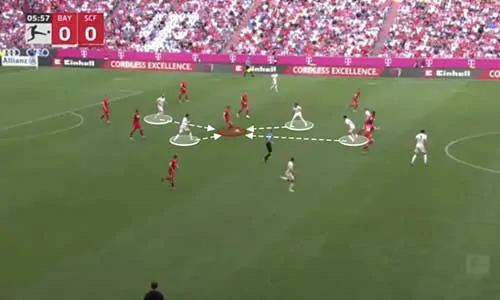
Modern football is no longer just about keeping possession; it is about controlling space and dictating transitions. If you have watched clubs like Liverpool under Jürgen Klopp or FC Barcelona dominate Europe, you have witnessed one of the most devastating tactical philosophies in sporting history. In this comprehensive tactical guide, we present Gegenpressing Explained: The High-Pressure Football Strategy. We will break down its origins, core mechanics, and tactical variations. Consequently, understanding this strategy will change how you view modern matches forever.
Table of Contents
- What is Gegenpressing Explained: The High-Pressure Football Strategy?
- The Historical Pioneers of Counter-Pressing
- The 4 Modern Variations of Gegenpressing
- Core Pillars of Gegenpressing Explained: The High-Pressure Football Strategy
- Analyzing the Advantages and Disadvantages
- How Modern Coaches Train Counter-Pressing Systems
- Frequently Asked Questions
What is Gegenpressing Explained: The High-Pressure Football Strategy?
To understand modern football, one must look at the transition phases. The term Gegenpressing is a German phrase that translates directly to “counter-pressing.” Specifically, it is an active defensive strategy where a team immediately attempts to win back possession the exact second they lose the ball, rather than retreating into a defensive low block.
When dissecting Gegenpressing Explained: The High-Pressure Football Strategy, one must realize that the primary objective is to exploit the opponent’s transition phase. When a team wins the ball, their players naturally transition from a defensive shape to an expansive attacking shape. Consequently, they are momentarily unorganized and highly vulnerable to losing the ball in dangerous areas of the pitch.
By implementing a high-pressure football strategy, the defending team acts aggressively in the opponent’s territory. They utilize numerical superiority to trap the ball carrier before they can execute a clean pass. Ultimately, this approach turns defending into an offensive tool, creating scoring opportunities just one or two passes away from the opponent’s goal.
The Historical Pioneers of Counter-Pressing
While many fans associate this tactical phenomenon with Jürgen Klopp, its roots run much deeper in football history. To appreciate why Gegenpressing Explained: The High-Pressure Football Strategy has dominated modern leagues, we must examine its tactical lineage. The foundations were laid decades ago by visionary minds who questioned traditional defensive retreats.
Valeriy Lobanovskyi’s legendary Dynamo Kyiv teams in the 1970s and 1980s utilized computerized physical metrics to press opponents collectively. In addition, Arrigo Sacchi’s iconic AC Milan side perfected a compact 4-4-2 structure that squeezed the pitch, leaving opposition players with absolutely no breathing room. They proved that organizing space off the ball was just as vital as possession.
In the late 1990s, Ralf Rangnick, widely known as the “Godfather of Gegenpressing,” systematized these ideas in Germany. In contrast to the traditional sweeper systems of the era, Rangnick advocated for ball-oriented zone pressing. His concepts heavily influenced a generation of coaches, including Wolfgang Frank, Thomas Tuchel, and Julian Nagelsmann, establishing Gegenpressing Explained: The High-Pressure Football Strategy as a cornerstone of German football philosophy.
The 4 Modern Variations of Gegenpressing
Not all counter-pressing styles are identical. Depending on the manager’s philosophy and squad profiles, the tactical execution varies. Understanding these differences is crucial to appreciating how Gegenpressing Explained: The High-Pressure Football Strategy is deployed at the elite level.
1. Man-Oriented Gegenpressing
This variation was famously popularized by Jürgen Klopp during his highly successful tenure at Borussia Dortmund. In this system, when possession is lost, every pressing player immediately locks onto the nearest opposition passing option. By tightly marking these outlets, they force the ball carrier into a panic decision, often resulting in a direct turnover.
2. Space-Oriented (Leeway) Gegenpressing
Alternatively, some teams prefer to press the space surrounding the ball carrier rather than individual players. The pressers close down the immediate vicinity, suffocating the player on the ball from all angles. This spatial compression isolates the ball carrier in a tight, high-pressure pocket, making clean exits virtually impossible.
3. Passing Lane-Oriented Pressing
Perfected by Pep Guardiola’s teams, this method focuses heavily on anticipation and interception. Instead of sprinting directly at the ball carrier or marking opponents tightly, players position themselves to block the most logical passing lanes. As a result, the opponent is lured into making a pass that is easily intercepted by a waiting defender.
4. Ball-Oriented Gegenpressing
This is perhaps the most aggressive variation. Multiple players immediately sprint toward the ball itself, completely ignoring designated zones or specific opponents. The objective is simple: create complete chaos around the ball carrier using raw intensity. This rapid swarm forces immediate errors due to sheer physical intimidation.
Indeed, Gegenpressing Explained: The High-Pressure Football Strategy is highly adaptable. Modern managers frequently blend these four approaches depending on the opponent’s technical strengths and weaknesses.
Core Pillars of Gegenpressing Explained: The High-Pressure Football Strategy
To execute a high-pressure football strategy successfully, a team cannot rely on enthusiasm alone. It requires supreme physical conditioning, absolute tactical discipline, and a deep understanding of spatial awareness. Below are the key pillars that keep this complex system functioning without collapsing.
The Five-Second Rule
The primary metric of counter-pressing success is time. Teams generally aim to regain possession or force a mistake within five to six seconds of losing the ball. If the opponent successfully completes three or four consecutive passes, they will escape the immediate press. Therefore, if the press fails within this window, the team must quickly retreat into a compact defensive block.
Rest-Defense (Restverteidigung)
A common misconception is that counter-pressing only starts when the ball is lost. On the contrary, preparation begins while the team is still in possession. This concept is known as rest-defense. While the forward players are attacking, the central defenders and holding midfielders must position themselves defensively to anticipate turnovers. Without structural discipline behind the ball, Gegenpressing Explained: The High-Pressure Football Strategy fails immediately, leaving the team exposed to devastating counter-attacks.
Furthermore, tactical details like vertical compactness are vital. The distance between the forward line and the defensive line must be kept as short as possible, usually under 30 meters. This compactness prevents the opposition from finding open spaces in midfield to exploit during transitions.
Analyzing the Advantages and Disadvantages
While the rewards of a successful high-press system are immense, the risks are equally high. Evaluating Gegenpressing Explained: The High-Pressure Football Strategy requires a balanced look at both sides of the coin. Below is a structured analysis of the system’s pros and cons.
| Key Tactical Aspect | Major Strengths (Pros) | Critical Vulnerabilities (Cons) |
|---|---|---|
| Goal Creation | Creates immediate scoring chances close to the opponent’s penalty area. | Over-reliance on transitions can lead to a lack of creativity in settled play. |
| Defensive Protection | Stops the opponent’s counter-attacks before they can gather momentum. | Extremely vulnerable to long, accurate diagonal passes over the high defensive line. |
| Physical Demands | Exhausts opposition defenders physically and mentally through constant pressure. | Causes severe player fatigue, muscle injuries, and late-game physical drop-offs. |
| Psychological Impact | Builds incredible team unity, high morale, and crowd momentum. | Can lead to defensive panic if the initial wave of pressing is bypassed easily. |
Consequently, managers must assess their squad’s depth and attributes before committing to this style. It is a high-risk, high-reward approach that leaves absolutely no room for half-measures or lazy defensive transitions.
How Modern Coaches Train Counter-Pressing Systems
Implementing Gegenpressing Explained: The High-Pressure Football Strategy on the grass requires meticulous, repetitive training. Players must develop subconscious reactions to tactical triggers. In modern training facilities, coaches use specialized drills to build these automatic habits.
One of the most effective tools is the transition rondo. For example, in a 4v4 plus 3 neutral player setup, the possession team must transition to immediate defenders the moment they turn the ball over. The coaching points emphasize closing down the ball carrier within two seconds of a turnover. For deeper tactical breakdowns of these exercises, elite coaches often study resources provided by the Coaches’ Voice.
In addition, small-sided games with artificial rules are highly beneficial. For instance, a coach might implement a rule where a goal scored within eight seconds of winning possession counts double. This incentivizes vertical thinking and rapid transitions. Tactical analysis communities, such as the theorists at Spielverlagerung, frequently highlight how these specific constraints shape player psychology on matchdays.
Conclusion: Embracing the Chaos of the High-Press
Ultimately, Gegenpressing Explained: The High-Pressure Football Strategy remains one of the most influential tactical developments in modern football. It is far more than just running hard; it is a highly calculated, structured system that weaponizes transition phases to dominate matches. While it requires elite athleticism and flawless tactical synchronization, the reward is a thrilling, high-tempo style of play that captures trophies and entertains millions.
Do you think your favorite club has the tactical discipline and physical stamina to successfully run a high-pressure football strategy? Or do you believe a deeper, more conservative defensive shape is the best counter to this system? Let us know your thoughts in the comments below, and don’t forget to share this article with your fellow football tacticians!
Frequently Asked Questions about Gegenpressing Explained: The High-Pressure Football Strategy
1. What is Gegenpressing Explained: The High-Pressure Football Strategy in simple terms?
In simple terms, it is a tactic where a team tries to win back the ball immediately after losing it, rather than running back to defend their own goal. The goal is to catch the opponent while they are disorganized and vulnerable.
2. Who is known as the “Godfather of Gegenpressing”?
Ralf Rangnick is widely known as the Godfather of Gegenpressing. He systematized the defensive transition philosophy in Germany during the late 1990s, heavily influencing modern managers like Jürgen Klopp, Thomas Tuchel, and Julian Nagelsmann.
3. Why does the 5-second rule define Gegenpressing Explained: The High-Pressure Football Strategy?
The 5-second rule is critical because it targets the brief window where the opponent is most disorganized. If the pressing team cannot win the ball back within 5 to 6 seconds, the opponent will likely find an open pass, forcing the pressing team to drop back and defend normally.
4. How does Gegenpressing differ from standard high pressing?
Standard high pressing is a proactive strategy used when the opponent has established possession at the back. In contrast, Gegenpressing is a reactive transition strategy triggered immediately after your own team loses possession during an attacking sequence.
5. Why is rest-defense so important in counter-pressing?
Rest-defense refers to how defenders position themselves while their team is actively attacking. It is crucial because if you lose possession and do not have a structured defensive cover behind the ball, the opponent can easily bypass your press and launch a dangerous counter-attack.
6. Is Gegenpressing Explained: The High-Pressure Football Strategy sustainable for an entire season?
It is highly challenging to maintain over a 60-game season. Because of the extreme physical demands, teams that rely heavily on this strategy often suffer from physical fatigue and muscle injuries, requiring managers to rotate squads frequently and adjust pressing triggers.