Football Yellow and Red Cards Explained: Rules, Suspensions and History
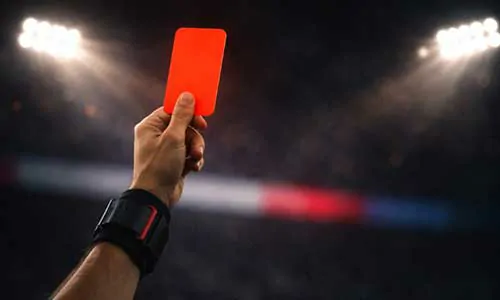
Football is a beautiful game, but it requires strict discipline to maintain order on the pitch. Referees carry two primary tools to enforce this discipline: yellow and red cards. In this comprehensive guide, we present Football Yellow and Red Cards Explained: Rules, Suspensions and History to give you an in-depth understanding of how these disciplinary measures keep the sport fair, safe, and universally understood across all continents.
Consequently, whether you are a casual viewer or a dedicated tactician, understanding the nuances of these disciplinary symbols is crucial. Historically, football was not always governed by visual cards. Therefore, the implementation of this system revolutionized how matches are moderated, overcoming language barriers and emotional outbursts. Today, we will explore everything you need to know about cautions, send-offs, and their lasting impact on the game.
Table of Contents
- 1. The Origin of Cards in Football
- 2. Yellow Cards Explained: Offences and Cautions
- 3. Red Cards Explained: Serious Violations and Direct Send-offs
- 4. Suspensions and Accumulation Rules in Modern Leagues
- 5. The Influence of VAR on Disciplinary Decisions
- 6. Famous Incidents and Record-Breaking Card Stats
- 7. Frequently Asked Questions (FAQ)
The History Behind the System: Football Yellow and Red Cards Explained: Rules, Suspensions and History
Before the 1970 World Cup, football had no yellow or red cards. Referees relied entirely on verbal warnings and physical gestures to control chaotic matches. However, this led to massive communication issues, especially in international matches where players and officials did not share a common language.
To illustrate this, during the 1966 World Cup quarter-final between England and Argentina, the referee, Rudolf Kreitlein, decided to send off Argentine captain Antonio Rattín. Rattín did not understand the verbal instruction and refused to leave the pitch for several minutes, causing a complete standstill. Furthermore, English stars Bobby and Jack Charlton only discovered they had been cautioned after reading the post-match newspapers.
As a result, English referee Ken Aston, then chairman of the FIFA Referees Committee, sought a global solution. While driving through London, he stopped at a traffic light on Kensington High Street. Looking at the lights, inspiration struck. He realized that yellow and red colors could transcend language. Yellow would mean “slow down and take it easy,” while red would represent “stop, you must leave”.
- 1970 World Cup (Mexico): First introduction of cards. Soviet player Kakhi Asatiani became the first player to receive a yellow card in World Cup history.
- 1974 World Cup (West Germany): Referees used physical red cards for the first time. Carlos Caszely of Chile was the first player shown a physical red card.
Yellow Cards Explained: Offences and Cautions
Under the International Football Association Board (IFAB Laws of the Game), a yellow card represents an official caution. It serves as a stern warning that a player is on the brink of being sent off. If a player receives two yellow cards in a single match, they automatically receive a red card, resulting in an immediate ejection.
Specifically, Law 12 outlines the primary offences that warrant a yellow card. To understand these infractions better, let us break down the most common offences:
- Unsporting Behaviour: This broad category includes committing reckless physical challenges, committing a tactical foul to stop a promising attack, or simulating an injury (diving).
- Dissent by Word or Action: Arguing with the referee, screaming at linesmen, or making sarcastic gestures showing disagreement with an official’s decision.
- Persistent Offences: Repeatedly breaking the rules. Even if the individual fouls are minor, a referee can issue a yellow card if a player repeatedly targets opponents.
- Delaying the Restart of Play: Preventing the opponent from taking a quick free kick, kicking the ball away after a whistle, or wasting time during goal kicks or throw-ins.
- Failure to Respect Required Distance: Standing too close to the ball during an opponent’s corner kick, free kick, or throw-in. Players must maintain the mandated 10-yard (9.15 meters) distance.
- Entering or Leaving the Pitch Without Permission: A player must receive a signal from the referee before entering, re-entering, or deliberately leaving the field of play.
In addition, certain goal celebrations will result in an automatic yellow card. For instance, removing your shirt, covering your face with a mask, or climbing onto perimeter fences will immediately trigger a booking from the referee.
Rules of the Game: Football Yellow and Red Cards Explained: Rules, Suspensions and History in Play
When studying how cards are administered during live gameplay, tactical nuances play a huge role. For example, a tactical foul (often called a professional foul) is deliberately committed to stop a counter-attack. Although these fouls are rarely dangerous, they directly attack the spirit of fair play. Therefore, referees must issue a yellow card to prevent teams from easily neutralizing attacking threats.
Moreover, the concept of a “reckless” tackle is defined as an action where a player acts with complete disregard to the danger or consequences for their opponent. In contrast, “careless” tackles result only in simple free kicks without further disciplinary action. Therefore, understanding the fine line between careless, reckless, and excessive force is a referee’s hardest task.
Red Cards Explained: Serious Violations and Direct Send-offs
A red card is the ultimate disciplinary action in football. When a player receives a red card, they must leave the pitch immediately and cannot be replaced, forcing their team to play the remainder of the match with ten players. Additionally, the player is banned from entering the technical area, meaning they cannot sit on the substitutes’ bench.
According to the official rules set by FIFA, a direct red card is shown for extremely severe offenses. These violations represent a direct danger to the players’ physical integrity or the integrity of the match itself. The specific red-card offenses include:
- Serious Foul Play: Any tackle or challenge that endangers the safety of an opponent or uses excessive force and brutality. This typically includes high, studs-up tackles that strike an opponent’s leg.
- Violent Conduct: When a player uses or attempts to use excessive force or brutality against an opponent, teammate, official, or spectator, when not challenging for the ball. This covers punching, kicking, headbutting, and striking.
- Spitting or Biting: Spitting at or biting any player, official, or spectator is an automatic direct red card and usually results in exceptionally long bans.
- Denying an Obvious Goal-Scoring Opportunity (DOGSO): Preventing a goal or an obvious scoring chance by deliberately handling the ball or fouling an opponent moving toward the goal.
- Offensive or Abusive Language: Using offensive, insulting, or highly abusive language, gestures, or actions toward anyone on or off the pitch.
- Receiving a Second Yellow: Committing two cautionable offenses in the same match results in an indirect red card.
In 2016, IFAB introduced an important adjustment known as the “Double Jeopardy” rule. Previously, if a player denied an obvious goal-scoring opportunity inside the penalty box, they received a red card, and the opponent got a penalty. Consequently, the team suffered a triple punishment: a penalty, playing with ten men, and a subsequent suspension.
Currently, if a player makes a genuine, legitimate attempt to play the ball inside the penalty box and commits a foul that denies a goal-scoring opportunity, they are only cautioned with a yellow card, while the penalty kick is still awarded. However, if the foul involves holding, pulling, pushing, or has no chance of playing the ball, the direct red card is still issued.
Football Yellow and Red Cards Explained: Rules, Suspensions and History in Modern Leagues
Disciplinary systems extend far beyond the ninety minutes of a single match. To prevent players from committing persistent fouls across multiple weeks, domestic leagues and international tournaments enforce accumulation rules. If a player accumulates a specific number of yellow cards over several matches, they face a mandatory suspension.
Because every tournament organizer manages their rules independently, suspension guidelines differ across the footballing world. To illustrate how these rules function, let us examine the suspension frameworks of major football competitions:
| Competition | Yellow Card Threshold | Suspension Length | Reset Rules / Details |
|---|---|---|---|
| English Premier League | 5 Yellows (before matchweek 19) 10 Yellows (before matchweek 32) |
1 Match ban 2 Match ban |
Thresholds expire after specific matchweeks. Direct red cards for violent conduct bring a 3-match ban. |
| Spanish La Liga | 5 Yellows | 1 Match ban | Applies throughout the season. Reaching 10, 15, or 20 yellow cards triggers subsequent 1-match bans. |
| UEFA Champions League | 3 Yellows | 1 Match ban | All yellow cards accumulated are completely wiped out after the Quarter-Finals stage. |
| FIFA World Cup | 2 Yellows | 1 Match ban | Accumulations are wiped clean after the Quarter-Finals to avoid missing the World Cup Final. |
Consequently, managers must meticulously plan their squad rotations. If a vital defensive midfielder is sitting on four yellow cards ahead of a crucial derby, the coach may choose to bench them to ensure they do not trigger a suspension for the high-stakes game. This tactical caution demonstrates how cards shape manager strategies off the pitch.
The Influence of VAR on Disciplinary Decisions
Since the introduction of the Video Assistant Referee (VAR), card administration has faced intense scrutiny. Many fans ask whether VAR can intervene on any card given by the referee. However, the official protocol limits VAR’s review powers to specific, high-consequence match scenarios.
To avoid constant delays, VAR can only check or reverse a direct red card decision. In addition, they can intervene to correct cases of mistaken identity, where a referee mistakenly books the wrong player. Conversely, VAR is strictly prohibited from reviewing second yellow card decisions, even if the second caution appears highly controversial.
This limitation has sparked ongoing debates in modern football. While VAR prevents clear and obvious errors in violent conduct or dangerous tackles, it can leave a team frustrated if a player is sent off via a highly questionable second yellow card that cannot be reviewed by the video monitors.
Famous Incidents and Record-Breaking Card Stats
Over the decades, several matches have entered footballing folklore due to unprecedented physical clashes and disciplinary chaos. These record-breaking games and players perfectly illustrate what happens when emotions boil over and referees are forced to repeatedly reach into their pockets.
Perhaps the most famous match in disciplinary history is the “Battle of Nuremberg” during the 2006 FIFA World Cup. In this Round of 16 clash between Portugal and the Netherlands, Russian referee Valentin Ivanov issued a record-shattering 16 yellow cards and 4 red cards. The match quickly devolved into a series of physical confrontations, leaving both teams heavily depleted.
| Record Category | Record Holder | Details / Statistics |
|---|---|---|
| Most Red Cards in Career | Gerardo Bedoya (Colombia) | An astonishing 46 red cards throughout his professional career. |
| Most Red Cards in Top European Leagues | Sergio Ramos (Spain) | Over 28 career red cards, holding records in both La Liga and the Champions League. |
| Most Cards in a Single World Cup Match | Portugal vs. Netherlands (2006) | 16 Yellow Cards and 4 Red Cards (The Battle of Nuremberg). |
| Fastest Red Card in World Cup History | José Batista (Uruguay) | Sent off after just 56 seconds against Scotland in 1986. |
In addition, English football has seen its share of wild card-related records. For instance, in 1998, referee Martin Sylvester actually showed himself a red card after punching a player during an amateur match. These bizarre events show that while the system is highly standardized, the human element always keeps the game unpredictable.
Summary of Football Yellow and Red Cards Explained: Rules, Suspensions and History
Ultimately, the disciplinary system is designed to preserve player safety and the structural integrity of the match. While yellow cards serve as vital warnings to calm aggressive behavior, red cards are essential to eject players who cross the line into dangerous or unsporting conduct. To quickly recap the core parameters of this essential framework, we have answered the most common questions below.
Q1: Can a player sit on the bench after receiving a red card?
No. Once a player receives a red card, they must leave the pitch and the technical area completely. They are prohibited from sitting on the substitutes’ bench and must head directly to the dressing room or sit in the stands.
Q2: What happens if a goalkeeper gets a red card?
If a goalkeeper gets a red card, the manager must substitute an outfield player for a backup goalkeeper. If the team has used all their substitutions, an outfield player must put on the goalkeeper shirt and play in goal for the rest of the match.
Q3: Do yellow cards carry over into extra time?
Yes, yellow cards issued during normal time remain active during 30 minutes of extra time. However, yellow cards do not carry over into penalty shootouts under modern IFAB rules to prevent unfair dismissals during spot kicks.
Q4: Who was the first player to receive a red card in football?
While players were verbally sent off as early as 1930, the first player to receive a physical red card was Carlos Caszely of Chile during the 1974 FIFA World Cup in a match against West Germany.
Q5: Can coaches and managers receive yellow and red cards?
Yes. In 2019, IFAB officially introduced physical yellow and red cards for team officials, including managers and coaches. If a coach acts aggressively or dissents from the technical area, the referee can card them.
Q6: How long is a suspension for a direct red card?
The length depends on the nature of the offence. A direct red card for violent conduct typically triggers a 3-match ban. For denying an obvious goal-scoring opportunity, the suspension is usually restricted to a 1-match ban.
Join the Discussion
Football’s disciplinary rules continue to evolve every season, especially with the continuous progression of technology like VAR. What is the most controversial red card decision you have ever witnessed in a match? Do you believe the current suspension rules are fair, or should they be adjusted?
Leave your thoughts in the comments section below and share this guide with your fellow football fans!