Football Position Numbers Explained: The Meaning of 1 to 11
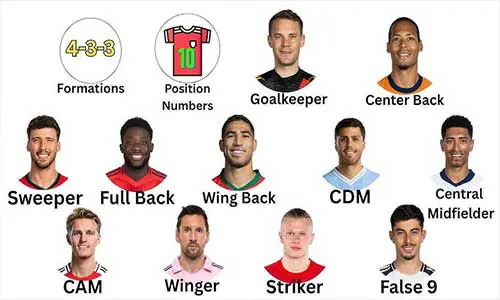
If you have ever watched a professional football match and wondered why certain players wear specific jerseys, you are not alone. Indeed, having the football position numbers explained: the meaning of 1 to 11 is crucial to truly understanding the tactical nuances, historical developments, and strategic structures of the beautiful game.
Historically, squad numbers were not merely random identifiers chosen by players for personal branding. Instead, they represented a rigid tactical roadmap. Consequently, knowing these traditional roles helps modern fans analyze matches with much greater depth. In this comprehensive guide, we will break down each position on the pitch, analyzing how the classic numbering system functions and how it continues to shape the modern game.
Table of Contents
- The Historical Origin of Squad Numbers
- Why Football Position Numbers Explained: The Meaning of 1 to 11 Matters to Fans
- Number 1: The Goalkeeper
- Numbers 2 & 3: The Traditional Full-Backs
- Numbers 4 & 5: The Central Defensive Pillars
- Number 6: The Defensive Midfielder
- Number 7: The Dynamic Winger
- Number 8: The Box-to-Box Engine
- Number 9: The Focal Point Striker
- Number 10: The Creative Playmaker
- Number 11: The Left Winger
- How Football Position Numbers Explained: The Meaning of 1 to 11 Influences Scouting
- Quick Reference: Football Positions 1-11 Table
- Frequently Asked Questions (FAQ)
The Historical Origin of Squad Numbers
To fully grasp the numbering system, we must first travel back to the early 20th century. Squad numbering was first trialed in England in 1928 during a match between Arsenal and Sheffield Wednesday. Consequently, the system became mandatory in English football by 1939.
During this era, the dominant tactical formation was the “WM” system, which essentially functioned as a 2-3-5 pyramid. Players were numbered sequentially from back to front, starting with the goalkeeper as number 1, moving through the defenders, midfielders, and ending with the five forwards. As tactical systems evolved into the classic 4-4-2 and modern 4-3-3, these numbers shifted. However, the core identity associated with each number remained firmly intact.
Why Football Position Numbers Explained: The Meaning of 1 to 11 Matters to Fans
In modern football, squad numbers have become fluid, with players often choosing high or unorthodox numbers for personal reasons. Nevertheless, commentators, managers, and scouts still use traditional numbers to describe specific tactical roles. For example, when a manager requests a “classic number 6,” they are not looking for a specific shirt; they are looking for a defensive midfielder.
Therefore, having these football position numbers explained: the meaning of 1 to 11 allows you to interpret tactical analyses, transfer rumors, and coaching decisions with absolute clarity. It bridges the gap between casual viewing and deep tactical understanding.
Number 1: The Goalkeeper
The number 1 shirt is almost exclusively reserved for the starting goalkeeper. As the final line of defense, the goalkeeper is the only player allowed to handle the ball within their own penalty area. Historically, their primary responsibility was purely shot-stopping and clearing danger.
However, the modern “sweeper-keeper” has drastically altered this role. Goalkeepers are now expected to initiate attacks from the back, demonstrate exceptional footwork, and maintain high composure under pressure. As a result, the number 1 is often the first playmaker in modern possession-based tactical setups.
Numbers 2 & 3: The Traditional Full-Backs
In a traditional back-four defensive system, numbers 2 and 3 occupy the wide defensive channels. Specifically, the number 2 is assigned to the right-back, whereas the number 3 is designated for the left-back.
Originally, their duties were strictly defensive: preventing opposing wingers from crossing and protecting the flanks. In contrast, modern full-backs are incredibly dynamic. They are expected to sprint up and down the pitch, overlap attackers, deliver precise crosses, and even tuck inside as inverted midfielders to help dominate central areas.
Numbers 4 & 5: The Central Defensive Pillars
The heart of any defense consists of the central defenders, traditionally assigned numbers 4 and 5. Depending on regional football cultures, the exact distribution of these numbers can vary slightly. For instance, in English football, number 5 is typically the dominant, physical center-back, while number 4 might play as a ball-playing defender or defensive midfielder.
Regardless of the minor regional differences, these players must possess excellent physical strength, aerial dominance, and sharp positional awareness. Furthermore, they are responsible for organizing the defensive line, executing crucial tackles, and starting building-up play from deep areas of the field.
Number 6: The Defensive Midfielder
Positioned just in front of the central defense, the number 6 acts as the tactical anchor of the team. This role is often called the “holding” or “defensive” midfielder. Their primary objective is to break up opponent counter-attacks, intercept passes, and shield the backline.
In addition to defensive duties, the number 6 must possess superb passing range. Players in this position, such as Sergio Busquets or Rodri, serve as the metronome of their teams, shifting the point of attack and maintaining possession under intense pressure from opposing forwards.
Number 7: The Dynamic Winger
The number 7 shirt carries immense prestige in football history, often associated with flair, speed, and match-winning capabilities. Traditionally, the number 7 was assigned to the right winger, whose job was to hug the touchline, beat defenders with dribbles, and cross the ball into the penalty box.
Over the years, this role has evolved significantly. Modern number 7s often act as “inverted wingers,” playing on the opposite side of their dominant foot so they can cut inside to shoot. Consequently, they are frequently among the top goalscorers in their respective leagues.
Number 8: The Box-to-Box Engine
The number 8 represents the tireless central midfielder, commonly referred to as a “box-to-box” player. This individual connects defense and attack, requiring exceptional stamina, passing ability, and tactical intelligence.
On one hand, the number 8 must track back to help regain possession. On the other hand, they must burst forward into the opponent’s box to assist with goalscoring opportunities. Iconic players like Steven Gerrard and Frank Lampard perfectly illustrated the dual defensive and offensive responsibilities of this demanding role.
Number 9: The Focal Point Striker
Perhaps no number carries more goalscoring expectation than the number 9. Traditionally worn by the center-forward or striker, the number 9 is the team’s primary offensive weapon. Their main objective is incredibly straightforward: score goals.
Whether playing as a physical target man who holds up the ball for teammates, or a predatory poacher sniffing out chances in the penalty area, the number 9 must possess elite finishing skills. In modern systems, they also initiate the team’s defensive press from the front, disrupting the opposition’s build-up.
Number 10: The Creative Playmaker
The number 10 is widely considered the most iconic shirt in football, worn by legendary figures like Pelé, Diego Maradona, and Lionel Messi. Historically, the number 10 operates in the “pocket of space” between the opposition’s midfield and defense.
Known as the *trequartista* or advanced playmaker, this player is the creative heartbeat of the team. They possess extraordinary vision, immaculate close control, and the ability to unlock stubborn defenses with a single, defense-splitting pass. Consequently, they are given significant freedom to roam and create.
Number 11: The Left Winger
Completing the classic line-up is the number 11, traditionally assigned to the left winger. Similar to the number 7, this player is characterized by electric pace, dribbling wizardry, and crossing precision.
In traditional formations, the number 11 stayed wide to stretch the opponent’s defensive block. Today, however, many modern number 11s are highly versatile forwards who can easily swap flanks, operate as second strikers, or play directly behind a central number 9.
How Football Position Numbers Explained: The Meaning of 1 to 11 Influences Scouting
Understanding how squad numbers correlate with on-pitch roles is a fundamental element of professional scouting and squad building. When sporting directors and scouts analyze potential transfer targets, they categorize players based on these numerical archetypes to find the perfect fit for their manager’s tactical system.
For example, if a team transitions from a defensive 4-4-2 to an attacking 4-3-3, the sporting director will specifically look for a high-energy “number 8” to drive the midfield forward, alongside a disciplined “number 6” to maintain structural balance. Thus, the classic 1-11 framework remains a universal language within the global scouting community.
To learn more about the formal tactical frameworks and rule sets that define these roles globally, you can explore the official guidelines provided by The International Football Association Board (IFAB). Additionally, for a deeper dive into tactical systems, check out the comprehensive analyses hosted on The Coaches’ Voice.
Quick Reference: Football Positions 1-11 Table
To help visualize this information quickly, the table below summarizes the classic positions, key responsibilities, and iconic modern examples for each of the core 1 to 11 numbers.
| Number | Traditional Position | Key Responsibilities | Iconic Examples |
|---|---|---|---|
| 1 | Goalkeeper | Shot-stopping, distribution, organizing defense | Manuel Neuer, Gianluigi Buffon |
| 2 | Right-Back | Defending wide areas, overlapping runs, crossing | Cafu, Kyle Walker |
| 3 | Left-Back | Flank protection, supporting attacks, wing-back play | Paolo Maldini, Roberto Carlos |
| 4 | Center-Back / Defensive Mid | Tackling, physical duels, aerial defense, building play | Virgil van Dijk, Sergio Ramos |
| 5 | Center-Back | Commanding the box, physical marking, leadership | Fabio Cannavaro, Carles Puyol |
| 6 | Defensive Midfielder | Shielding defense, intercepting, retaining possession | Rodri, Claude Makélélé |
| 7 | Right Winger | Dribbling, creation, crossing, scoring goals | Cristiano Ronaldo, David Beckham |
| 8 | Box-to-Box Midfielder | Linking play, stamina, box arrivals, pressing | Luka Modrić, Steven Gerrard |
| 9 | Striker / Center-Forward | Finishing, hold-up play, run-making, central threat | Erling Haaland, Robert Lewandowski |
| 10 | Attacking Midfielder | Playmaking, defense-splitting passes, elite vision | Lionel Messi, Zinedine Zidane |
| 11 | Left Winger | Pace, crossing, cutting inside, penalty box entries | Ryan Giggs, Gareth Bale |
Frequently Asked Questions (FAQ)
What is a “False Nine” in football?
A “False Nine” is an unconventional striker who, instead of staying high up the pitch to pin the opposition’s defenders, drops deep into the midfield. Consequently, this movement pulls central defenders out of position, creating large gaps for wingers or central midfielders to run into and score.
Can players wear numbers higher than 11?
Yes. In modern club football, squad sizes are much larger than 11 players, and leagues permit squad numbers up to 99. However, in major international tournaments like the FIFA World Cup, squads are traditionally limited to numbers 1 through 26.
What does a “double pivot” mean in relation to midfield numbers?
A double pivot refers to a tactical setup where a team plays with two deep-lying midfielders instead of one. Usually, this consists of two “number 6s” or a combination of a “number 6” and a “number 8” working together to screen the defense and distribute the ball.
Are position numbers the same across all countries?
While the overall concepts are highly similar worldwide, minor differences exist. For example, in South American football, the number 5 is historically the primary holding midfielder, and the number 6 is often used for the left-back, which differs from the traditional English system.
Why do some players wear very unusual numbers like 41 or 39?
Players often wear high numbers because they were assigned those shirts when they first graduated from the club’s youth academy. Over time, some players choose to keep these numbers throughout their careers due to personal superstition or brand identity.
Conclusion
In summary, while modern squad sheets are filled with high numbers and customized player choices, the traditional 1 to 11 system remains the foundational blueprint of football tactics. Knowing how these roles connect helps you appreciate the deep, strategic elements of the sport during every match.
Do you prefer the classic, disciplined roles of the past, or do you enjoy the highly versatile, fluid positions of the modern era? We would love to hear your thoughts! Share this article with fellow football enthusiasts, and leave a comment below explaining which position number you would wear if you walked out onto the pitch today.