Football Formations Guide: From 4-4-2 to Today’s Tactical Systems
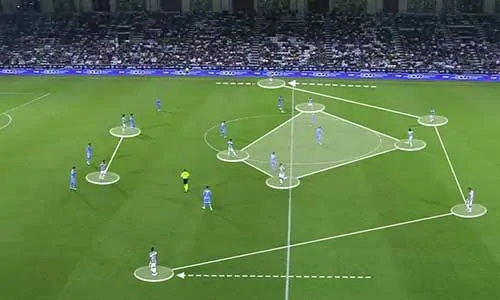
Football is a beautiful, ever-evolving game. Over the decades, tactical innovations have transformed how teams set up on the pitch. If you want to understand these shifts deeply, you need a comprehensive Football Formations Guide: From 4-4-2 to Today’s Tactical Systems. Understanding these structures helps fans, players, and aspiring coaches appreciate the chess match happening on the green grass.
Historically, teams relied on rigid structures. However, modern football demands immense fluidity, where a team’s shape changes constantly between possession phases. In this ultimate Football Formations Guide: From 4-4-2 to Today’s Tactical Systems, we will break down the history, mechanics, and modern application of football’s most influential tactical setups.
Table of Contents
- 1. The Golden Standard: Decoding the Traditional 4-4-2
- 2. The Cruyff Influence: How the 4-3-3 Redefined Possession
- 3. The Pragmatic Era: Why the 4-2-3-1 Took Over Europe
- 4. The Resurgence of the Back Three: 3-5-2 and 3-4-3
- 5. Modern Fluidity: In-Possession vs. Out-of-Possession Shapes
- 6. Tactical Overview: Comparing Key Formations
- 7. Modern Tactical Concepts Explained
- 8. Frequently Asked Questions (FAQ)
- 9. Conclusion & Final Thoughts
1. The Golden Standard: Decoding the Traditional 4-4-2
For several decades, the 4-4-2 formation was the undisputed king of football. It provided a perfect balance of defensive stability and attacking threat. Consequently, almost every elite European club relied on this system throughout the 1980s and 1990s.
This structure consists of four defenders, four midfielders, and two central strikers. Typically, one striker acts as a target man, while the second striker plays in a more supportive role, finding spaces in the “pocket” between the opponent’s midfield and defense.
Additionally, the wide midfielders are expected to deliver precise crosses into the penalty box. Defensively, the two banks of four create a compact block that is incredibly difficult to break down when organized properly.
Strengths and Weaknesses of the 4-4-2
While the 4-4-2 offers great pitch coverage, it is not without its flaws. In this Football Formations Guide: From 4-4-2 to Today’s Tactical Systems, we must highlight both sides of this classic shape:
- Strength: Excellent defensive structure with clear, straightforward defensive responsibilities for all players.
- Strength: Strong attacking presence with two central strikers occupying opposing center-backs.
- Weakness: Susceptible to being outnumbered in central midfield by teams playing a three-man midfield.
- Weakness: Predictability in build-up play, making it easier for modern pressing systems to isolate the ball.
As modern tactics evolved, managers realized that controlling the center of the pitch was crucial. Consequently, the flat 4-4-2 gradually lost its dominance, paving the way for more dynamic systems.
2. The Cruyff Influence: How the 4-3-3 Redefined Possession
When discussing tactical evolution, we must analyze the iconic 4-3-3 system. Popularized by Johan Cruyff and the Ajax school of “Total Football,” this formation prioritizes possession, triangles, and spatial dominance.
Unlike the rigid lines of the 4-4-2, the 4-3-3 relies heavily on a single defensive midfielder (the “regista” or anchor) and two advanced central midfielders. This midfield trio forms a natural triangle, allowing for superior passing angles during build-up play.
Furthermore, the wide forwards in a 4-3-3 are designed to stretch the opponent’s defensive line. In modern iterations, these wingers often cut inside on their stronger foot, allowing the fullbacks to overlap and join the attack.
Key Variations of the Modern 4-3-3
Over the years, managers like Pep Guardiola and Jürgen Klopp have adapted the 4-3-3 to suit modern physical demands. These variations are crucial to our Football Formations Guide: From 4-4-2 to Today’s Tactical Systems:
- The False Nine Variation: Instead of a traditional striker, a creative playmaker occupies the central forward position, dropping deep to create midfield overloads.
- The High-Pressing 4-3-3: Wingers press high and narrow, forcing the opponent to play through the congested center of the pitch.
As a result of these adjustments, the 4-3-3 remains one of the most popular and devastating attacking formations in modern football history.
3. The Pragmatic Era: Why the 4-2-3-1 Took Over Europe
During the late 2000s and early 2010s, the 4-2-3-1 emerged as the ultimate tactical antidote to the possession-heavy 4-3-3. This formation offers a highly secure defensive base while maintaining a potent counter-attacking threat.
The defining feature of this system is the double pivot—two defensive midfielders playing in front of the back four. This pairing provides immense protection against central counter-attacks and allows the fullbacks to push forward with peace of mind.
Ahead of the double pivot, three attacking midfielders operate behind a lone striker. The central attacking midfielder (the classic “number 10”) serves as the primary creative hub, pulling the strings in the final third.
How the 4-2-3-1 Balancing Act Works
Indeed, the beauty of the 4-2-3-1 lies in its balance. It can easily transition into a defensive 4-5-1 when out of possession, making it incredibly difficult for opponents to find passing lanes through the lines.
Nevertheless, if the double pivot lacks mobility, the team can become disconnected. This structural challenge is why modern managers continue to innovate, seeking even greater flexibility in their tactical setups.
4. The Resurgence of the Back Three: 3-5-2 and 3-4-3
In recent years, formations featuring three central defenders have experienced a massive renaissance. Once considered defensive and outdated, systems like the 3-5-2 and 3-4-3 are now utilized by elite attacking teams worldwide.
The driving force behind this resurgence is the role of the wing-back. In a back-three system, wing-backs are responsible for providing both defensive width and attacking depth. When attacking, they act as wingers; when defending, they drop back to form a solid five-man defense.
Furthermore, having three central defenders makes it much easier to build play from the back. It allows teams to comfortably bypass high-pressing opponents by creating numerical overloads in their own defensive third.
Understanding the Tactical Differences
To fully grasp this Football Formations Guide: From 4-4-2 to Today’s Tactical Systems, we must differentiate between the two main back-three systems:
- The 3-5-2: Focuses heavily on central dominance with three central midfielders and two strikers working in tandem to disrupt opposing defenses.
- The 3-4-3: Utilizes a front three, allowing for rapid wide attacks and high-pressing scenarios in the final third.
Consequently, back-three systems offer unmatched tactical flexibility, allowing managers to adapt their defensive and offensive shapes in real-time during a match.
5. Modern Fluidity: In-Possession vs. Out-of-Possession Shapes
In the contemporary era, referring to a team’s formation as a static set of numbers (like 4-3-3 or 4-4-2) is becoming increasingly obsolete. Modern football is highly fluid, and formations are dynamic states rather than fixed positions.
Most elite coaches design separate shapes for different phases of the game. Specifically, a team might defend in a compact 4-4-2 block but immediately transition into a 3-2-4-1 shape when they win possession of the ball.
This tactical concept has been masterfully implemented by teams using inverted fullbacks. A fullback will drift into midfield during the build-up phase, forming a temporary double pivot and allowing other midfielders to push higher up the pitch.
This level of tactical sophistication highlights why analyzing the game requires a modern, fluid mindset. As tactics continue to progress, the boundaries between traditional positions will continue to blur.
6. Tactical Overview: Comparing Key Formations
To help you visualize how these systems stack up against one another, we have compiled a comparison table detailing their primary uses, pros, and cons.
| Formation | Primary Philosophy | Key Strength | Main Vulnerability |
|---|---|---|---|
| 4-4-2 | Structure & Balance | Defensive compactness & dual striker threat | Midfield underloads against central trios |
| 4-3-3 | Possession & Triangles | Superior passing angles & wide wingers | Spaces left behind advancing fullbacks |
| 4-2-3-1 | Pragmatism & Counter-attack | Excellent defensive shield & strong transition | Isolation of the lone striker if unsupported |
| 3-5-2 | Flexibility & Overloads | Control of central areas & build-up overload | Physical fatigue on wing-backs covering flanks |
7. Modern Tactical Concepts Explained
To fully appreciate any Football Formations Guide: From 4-4-2 to Today’s Tactical Systems, one must understand the modern terminology used by elite tactical analysts. Here are the core concepts driving today’s tactical landscape:
- The Half-Spaces: The longitudinal channels on the pitch between the center and the flanks. Modern playmakers love to exploit these zones to create goalscoring opportunities.
- Rest Defense (Restverteidigung): The defensive positioning of a team while they are currently in possession. It ensures they are prepared to stop counter-attacks immediately if they lose the ball.
- The Box Midfield: A four-man central midfield shape (often 2 defensive and 2 attacking midfielders) designed to dominate the center of the pitch and create passing overloads.
- The Low Block: A defensive strategy where a team defends very deep in their own half, prioritizing space restriction over winning the ball high up the pitch.
For more deep-dive analyses on individual coaching philosophies and drills, highly reputable resources like The Coaches’ Voice offer phenomenal tactical breakdowns.
8. Frequently Asked Questions (FAQ)
What is the most successful football formation of all time?
There is no single “best” formation, as success depends entirely on player profiles and execution. However, the 4-4-2 dominated the 80s and 90s, while the 4-3-3 has defined the modern era of high-possession football.
Why did teams stop using the classic 4-4-2?
As tactics evolved, teams realized that a two-man midfield was easily overrun by opponents playing three central midfielders. Consequently, managers shifted to formations like the 4-3-3 and 4-2-3-1 to control the center of the pitch.
What does “inverted fullback” mean?
An inverted fullback is a defender who moves inside into the midfield when their team has possession, rather than staying wide on the touchline. This tactic helps dominate midfield possession and provides cover against counter-attacks.
How does a coach choose the right tactical system?
A coach chooses a system based on the technical and physical strengths of their available squad. For example, if a team has highly energetic fullbacks but lacks natural wingers, a back-three system like the 3-5-2 is often preferred.
What is the difference between a 4-3-3 and a 4-2-3-1?
The primary difference lies in the midfield structure. A 4-3-3 typically features one holding midfielder and two advanced midfielders, whereas a 4-2-3-1 uses two holding midfielders (a double pivot) and one central attacking playmaker.
Are formations static during a 90-minute match?
No, modern formations are highly fluid. A team’s shape is constantly changing depending on whether they are building up from the back, attacking in the final third, pressing high, or defending deep in a low block.
9. Conclusion & Final Thoughts
Tactical evolution in football is a fascinating journey of action and reaction. From the rigid defensive blocks of the traditional 4-4-2 to the hyper-fluid positional play of today, managers continuously adapt to find a competitive edge over their rivals.
This Football Formations Guide: From 4-4-2 to Today’s Tactical Systems demonstrates that no formation is permanently obsolete or completely invincible. The beauty of football lies in this perpetual tactical chess match, where innovation is always just one match away.
To keep learning more about official football regulations and historical tactical milestones, consider browsing through the official FIFA resources.
What is your favorite football formation? Do you prefer tactical rigidity or fluid positional play? Let us know in the comments below, and don’t forget to share this guide with your fellow football fanatics!