FIFA World Cup Trophy History: Who Owns and Keeps the Original Cup?
Introduction
Few sporting honors compare to the prestige of lifting the ultimate prize in association football. Understanding the FIFA World Cup Trophy History: Who Owns and Keeps the Original Cup? is essential for any sports enthusiast. This iconic gold statue has inspired generations, survived international wars, and even vanished under mysterious circumstances. In this comprehensive guide, we explore the deep heritage, ownership laws, and security protocols surrounding the world’s most coveted football trophy.
Table of Contents
- The Origin: The Jules Rimet Trophy (1930–1970)
- Dramas of the Jules Rimet: War, Thefts, and Pickles the Dog
- Brazil’s Permanent Prize and the 1983 Tragedy
- The Modern Era: Designing the Current FIFA World Cup Trophy
- Current Rules: Who Actually Keeps the Original Cup?
- Materials, Dimensions, and True Valuation
- Comparison Table: Jules Rimet vs. Modern Trophy
- Frequently Asked Questions (FAQs)
The Origin: The Jules Rimet Trophy (1930–1970)
To truly grasp the FIFA World Cup Trophy History: Who Owns and Keeps the Original Cup?, we must return to the tournament’s roots in 1930. The original trophy was designed by French sculptor Abel Lafleur. It was crafted from gold-plated sterling silver and rested on a blue lapis lazuli base.
Originally named “Victory,” the statuette depicted Nike, the ancient Greek goddess of victory, holding an octagonal vessel aloft. Furthermore, in 1946, the trophy was officially renamed the Jules Rimet Trophy. This change was made to honor the visionary FIFA President who played a pivotal role in creating the tournament.
During this early era, a simple rule dictated ownership. FIFA declared that any nation winning the tournament three times would earn permanent possession of the original trophy. This policy set the stage for intense competition among the world’s footballing giants.
Dramas of the Jules Rimet: War, Thefts, and Pickles the Dog
In the context of the FIFA World Cup Trophy History: Who Owns and Keeps the Original Cup?, the early trophy was surrounded by high-stakes drama. During World War II, FIFA Vice-President Ottorino Barassi secretly removed the trophy from a bank vault in Rome. Fearing Nazi forces would seize it as war loot, he hid the trophy inside a humble shoebox under his bed until the conflict ended.
However, the trophy’s safety was threatened again in 1966. Just months before the World Cup was scheduled to begin in England, the Jules Rimet Trophy was stolen from a public exhibition in London. The theft triggered an intensive international search.
In an unexpected twist, a heroic collie dog named Pickles saved the day. A week after the theft, Pickles discovered the trophy wrapped in newspaper beneath a suburban hedge. Consequently, the trophy was recovered in time for the tournament, and England went on to lift it on home soil.
Brazil’s Permanent Prize and the 1983 Tragedy
The year 1970 marked a massive milestone in football history. Brazil defeated Italy in the final to win their third World Cup title, following victories in 1958 and 1962. Under FIFA’s active regulations, the Brazilian Football Confederation (CBF) earned permanent ownership of the Jules Rimet Trophy.
Unfortunately, this chapter of the FIFA World Cup Trophy History: Who Owns and Keeps the Original Cup? ended in tragedy. In December 1983, thieves broke into the CBF headquarters in Rio de Janeiro. They bypassed the security system, overpowered the night watchman, and stole the historic gold statuette.
Unlike the London incident of 1966, this theft did not have a happy ending. The original Jules Rimet Trophy was never recovered. It is widely believed by authorities and historians that the thieves melted the gold down to sell it on the black market. Today, only a replica remains on display in Brazil.
The Modern Era: Designing the Current FIFA World Cup Trophy
Following Brazil’s permanent acquisition of the Jules Rimet Trophy in 1970, FIFA required a brand-new trophy for the 1974 tournament. They launched an open design competition, receiving fifty-three unique submissions from sculptors across seven countries.
Ultimately, the winning design was submitted by Italian artist Silvio Gazzaniga, working for the famous GDE Bertoni workshop in Milan. Gazzaniga’s masterpiece represented a departure from the classic winged victory style.
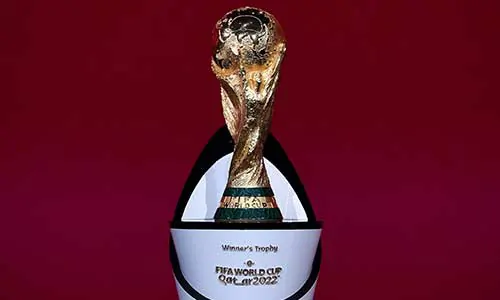
The modern design depicts two human figures spiraling upward from the base to hold up a golden globe of the Earth. Gazzaniga described the design as representing the dynamic energy, athleticism, and joy of victory. This design remains the iconic symbol of world football to this day.
Current Rules: Who Actually Keeps the Original Cup?
When studying the FIFA World Cup Trophy History: Who Owns and Keeps the Original Cup?, it is vital to know that the rules of custody changed completely after 1974. FIFA realized that letting nations permanently keep the physical trophy was risky and unsustainable.
Therefore, under modern FIFA regulations, the original trophy remains the permanent property of FIFA. It is housed in the FIFA World Football Museum in Zürich, Switzerland, and only leaves for official tours, the World Cup draw, and the final match.
What happens when a country wins the World Cup today? During the post-match celebration, the winning team is allowed to lift the original, solid-gold trophy. However, before they leave the stadium, the original is taken back by FIFA officials. In its place, the winning nation is awarded a gold-plated bronze replica, known as the FIFA World Cup Winner’s Trophy, to display in their country.
Materials, Dimensions, and True Valuation
Another captivating aspect of the FIFA World Cup Trophy History: Who Owns and Keeps the Original Cup? is the physical makeup of the modern icon. Crafted from 18-karat solid gold, the trophy stands 36.8 centimeters (14.5 inches) high and weighs exactly 6.175 kilograms (13.61 pounds).
The base features two beautiful bands of green malachite, a semi-precious stone. If you look at the bottom of the base, you will find the engraved names of every winning nation since 1974. FIFA has stated that there is only space on the base to accommodate winners’ names until the 2038 World Cup, after which the base will likely be redesigned.
To ensure a highly detailed look at how these two historical trophies stack up, explore the comparison table below.
Comparison Table: Jules Rimet vs. Modern Trophy
| Feature | Jules Rimet Trophy (1930–1970) | Modern FIFA World Cup Trophy (1974–Present) |
|---|---|---|
| Designer | Abel Lafleur (France) | Silvio Gazzaniga (Italy) |
| Materials Used | Gold-plated sterling silver, lapis lazuli | 18-karat solid gold, green malachite |
| Weight | 3.8 kg (8.4 lbs) | 6.175 kg (13.61 lbs) |
| Height | 35 cm (13.7 in) | 36.8 cm (14.5 in) |
| Depiction | Nike (Greek Goddess of Victory) | Two human figures holding up the Earth |
| Permanent Ownership | Granted to Brazil in 1970 (stolen in 1983) | Never granted permanently (retained by FIFA) |
| Current Location | Missing (believed melted down) | FIFA Museum in Zürich, Switzerland |
In terms of monetary value, the raw material cost of the current trophy is estimated at roughly $713,000 based on modern gold prices. However, because of its cultural significance and sports pedigree, experts value the entire piece at upwards of $20 million, making it one of the most valuable trophies in global sports. For further reference on historical sports awards, you can consult the Olympics Official Trophy History Guide.
Frequently Asked Questions (FAQs)
1. Who currently owns the original FIFA World Cup Trophy?
The original trophy is permanently owned by FIFA. It is securely housed at the FIFA World Football Museum in Zürich, Switzerland, and is only brought out for official ceremonies and match finals.
2. Does the winning country get to keep the real World Cup trophy?
No, they do not. The winning team only handles and lifts the original during the stadium celebrations immediately after the final whistle. They are subsequently given a gold-plated bronze replica to take home.
3. What happened to the original Jules Rimet Trophy?
After being awarded permanently to Brazil in 1970, the Jules Rimet Trophy was stolen from the Brazilian Football Confederation’s offices in Rio de Janeiro in 1983. It was never found and is believed to have been melted down.
4. How much is the current FIFA World Cup Trophy worth?
While the gold materials used to make it are worth about $713,000, its extreme cultural and historic value places its overall appraisal at approximately $20 million.
5. Who is allowed to touch the original FIFA World Cup Trophy?
To preserve security and prestige, FIFA enforces a strict protocol: only former World Cup winners (players and managers) and heads of state are legally permitted to touch the original trophy with their bare hands.
6. Can a country keep the current trophy if they win it three times?
No. Under the rules established in 1974, no nation is allowed to keep the original trophy permanently, regardless of how many times they win the tournament. Only replicas are handed out.
Conclusion
The journey of football’s ultimate prize is a story defined by both triumph and security challenges. By looking back at the FIFA World Cup Trophy History: Who Owns and Keeps the Original Cup?, we see a clear transition from the vulnerable Jules Rimet era to a highly secured, modern administrative system. Today, while victory on the pitch remains eternal, the physical gold stays safe in Switzerland, preserving the integrity of the tournament for future generations.
What is your favorite memory from World Cup history? Let us know in the comments below, and share this article with fellow football fans to keep the passion for the beautiful game alive!