FIFA World Cup 2026 Stadium Guide: Locations, Capacities and Key Facts
The global football landscape is preparing for an unprecedented celebration as the historic 23rd edition of the tournament unfolds across North America. To help you navigate this massive sporting event, we have put together the ultimate FIFA World Cup 2026 Stadium Guide: Locations, Capacities and Key Facts. With 48 teams competing across three host nations, having a clear understanding of the venues is essential for any football enthusiast.
In this guide, we break down each of the 16 host stadiums across the United States, Mexico, and Canada. You will discover their official tournament names, confirmed seating capacities, and unique architectural features. Consequently, this detailed analysis will prepare you for the matches, whether you are planning to attend in person or watching from home.
Table of Contents
1. Comprehensive Stadium Overview Table
To provide a quick reference, the table below highlights the official tournament names, locations, and confirmed seating capacities for all 16 stadiums. Please note that FIFA utilizes non-commercial names during the tournament to comply with strict branding regulations.
| Official FIFA Name | Commercial Name | Location | Capacity |
|---|---|---|---|
| New York New Jersey Stadium | MetLife Stadium | East Rutherford, NJ, USA | 80,663 |
| Dallas Stadium | AT&T Stadium | Arlington, TX, USA | 70,649 |
| Los Angeles Stadium | SoFi Stadium | Inglewood, CA, USA | 70,492 |
| Atlanta Stadium | Mercedes-Benz Stadium | Atlanta, GA, USA | 68,239 |
| San Francisco Bay Area Stadium | Levi’s Stadium | Santa Clara, CA, USA | 68,827 |
| Seattle Stadium | Lumen Field | Seattle, WA, USA | 66,925 |
| Houston Stadium | NRG Stadium | Houston, TX, USA | 68,777 |
| Philadelphia Stadium | Lincoln Financial Field | Philadelphia, PA, USA | 68,324 |
| Kansas City Stadium | Arrowhead Stadium | Kansas City, MO, USA | 69,045 |
| Boston Stadium | Gillette Stadium | Foxborough, MA, USA | 64,146 |
| Miami Stadium | Hard Rock Stadium | Miami Gardens, FL, USA | 64,478 |
| Mexico City Stadium | Estadio Azteca | Mexico City, Mexico | 80,824 |
| Monterrey Stadium | Estadio BBVA | Guadalupe, NL, Mexico | 51,243 |
| Guadalajara Stadium | Estadio Akron | Zapopan, JAL, Mexico | 45,664 |
| Toronto Stadium | BMO Field | Toronto, ON, Canada | 43,036 |
| BC Place Vancouver | BC Place | Vancouver, BC, Canada | 52,497 |
2. Deep Dive: FIFA World Cup 2026 Stadium Guide: Locations, Capacities and Key Facts
Understanding the sheer scale of the 16 host stadiums is crucial to comprehending the physical layout of this multi-national tournament. Historically, hosting a World Cup across thousands of miles introduces major logistical and climatic differences. However, this comprehensive FIFA World Cup 2026 Stadium Guide: Locations, Capacities and Key Facts will clarify how geography, size, and local histories shape the competitive environment.
Furthermore, because the tournament features an expanded format with 48 teams, each venue plays a distinct strategic role. From high-altitude Mexican arenas to ultra-modern, climate-controlled environments in the United States, players and fans will encounter diverse playing conditions. Therefore, keeping track of these parameters is vital for identifying tactical advantages.
Ultimately, the objective of our FIFA World Cup 2026 Stadium Guide: Locations, Capacities and Key Facts is to equip you with the deep insights necessary to follow every phase of the championship. Let us explore these iconic venues in detail, grouped by the respective host countries.
3. United States Venues Analysis
The United States is staging the majority of the matches, utilizing 11 state-of-the-art arenas. Many of these locations are premium multi-purpose facilities regularly used by American football franchises. Consequently, they feature incredibly modern infrastructure, robust technological setups, and excellent seating configurations.
New York New Jersey Stadium (MetLife Stadium)
Situated in East Rutherford, New Jersey, this massive open-air arena holds an official capacity of 80,663 spectators for the tournament. Located just outside the bustling metropolitan core of New York City, it is scheduled to host the highly coveted World Cup Final on July 19, 2026.
The stadium is notable for its sleek, outer-skin architecture designed to illuminate in different colors depending on the home team. Although it lacks a physical roof, its multi-tiered bowl offers fantastic sightlines. This venue has hosted numerous historic international matches, proving its capability to accommodate the grandest stage of world football.
Dallas Stadium (AT&T Stadium)
In Arlington, Texas, Dallas Stadium stands as an engineering marvel, boasting a confirmed tournament seating capacity of 70,649. It features a monumental retractable roof structure and one of the largest high-definition video boards suspended directly over the pitch.
This venue is highly versatile, with a configuration that allows the capacity to scale depending on operational layouts. During the tournament, Dallas Stadium is hosting a busy schedule, including a crucial semifinal match. Its indoor climate-controlled environment guarantees consistent playing conditions, regardless of summer heatwaves.
Los Angeles Stadium (SoFi Stadium)
Located in Inglewood, California, Los Angeles Stadium holds up to 70,492 fans. Designed as a premium architectural masterpiece, it utilizes a unique translucent canopy roof and a double-sided oval video display known as the “Infinity Screen.”
Historically, Los Angeles is a city deeply connected to international soccer legacy. For this tournament, the venue will be the focal point for West Coast fixtures and will serve as the host for the United States National Team’s opening group-stage match.
Atlanta Stadium (Mercedes-Benz Stadium)
With a confirmed capacity of 68,239, Atlanta Stadium features a highly recognizable pinwheel retractable roof. Its sustainable design has earned it prestigious green building certifications, making it an eco-friendly marvel.
Additionally, the stadium is famous for its 360-degree halo video board. It is scheduled to host highly demanding knockout matches, including one of the semifinal fixtures, ensuring an electric atmosphere under its closed canopy.
San Francisco Bay Area Stadium (Levi’s Stadium)
Located in Santa Clara, California, this eco-friendly venue has an official capacity of 68,827. It is highly regarded for its commitment to solar energy, featuring an extensive green roof and solar panel installations.
Furthermore, being in the heart of Silicon Valley, it boasts state-of-the-art digital infrastructure, offering fans exceptional high-speed connectivity. The open-air layout takes advantage of Northern California’s mild summer evenings.
Seattle Stadium (Lumen Field)
Seattle Stadium is an open-air venue with an official tournament capacity of 66,925. It is renowned across North America for its unique acoustic design, where overhanging roof canopies reflect crowd noise back onto the pitch, creating an incredibly intense environment.
The facility provides spectacular views of the downtown Seattle skyline and Puget Sound. It is set to host several critical group-stage matches where atmosphere and vocal fan support will play a key role.
Houston Stadium (NRG Stadium)
As the first NFL stadium ever built with a retractable roof, Houston Stadium offers a capacity of 68,777. The facility has a long-standing history of hosting major international soccer events, championship college football games, and Super Bowls.
Its natural grass conversion system and reliable climate control make it a stable environment for high-stakes matches during the peak of summer.
Philadelphia Stadium (Lincoln Financial Field)
Holding up to 68,324 spectators, Philadelphia Stadium is a beautiful open-air facility opened in 2003. It is widely celebrated for its environmental initiatives, utilizing wind turbines and massive solar panels to generate energy.
The venue is poised to host critical group-stage and knockout fixtures during a period that coincides with historic national celebrations in the city, enhancing the cultural weight of the matches.
Kansas City Stadium (GEHA Field at Arrowhead Stadium)
Officially recognized as one of the loudest open-air stadiums in the world, Kansas City Stadium features a classic, open-bowl design with a tournament capacity of 69,045.
Its layout provides fans with excellent sightlines. This venue is perfect for capturing the raw, traditional energy of football, making it a highly anticipated location for international visitors looking to experience authentic sporting passion.
Boston Stadium (Gillette Stadium)
Located in Foxborough, Massachusetts, Boston Stadium holds a tournament capacity of 64,146. The stadium recently underwent massive renovations, which added a grand lighthouse feature and a major curved video board.
Steeped in professional championship history, this open-air venue is easily accessible to East Coast fans and remains a cornerstone of the tournament’s northeastern division.
Miami Stadium (Hard Rock Stadium)
Miami Stadium, situated in Miami Gardens, Florida, has a capacity of 64,478. It features an open-air canopy that covers approximately 90% of the seating area, keeping fans shaded from the sun and protected from summer rain.
Because of its vibrant multicultural community, the venue will deliver a phenomenal festival atmosphere. Consequently, it is scheduled to host several major fixtures, including the Bronze Final (third-place playoff match).
4. Mexico Venues Analysis
Mexico provides some of the most historic and visually captivating venues in the entire tournament. Football culture here runs exceptionally deep, and this passion is reflected in the design and atmospheres of these three host locations. This section of our FIFA World Cup 2026 Stadium Guide: Locations, Capacities and Key Facts details the arenas in Mexico.
Mexico City Stadium (Estadio Azteca)
A true cathedral of international football, Mexico City Stadium holds a confirmed capacity of 80,824. It makes history as the first stadium to host matches in three separate World Cup editions (1970, 1986, and 2026).
This venue hosted the highly anticipated opening match on June 11, 2026. At an elevation of over 7,200 feet, playing here demands peak physical endurance from competing athletes, adding a complex layer of tactical difficulty to the matches.
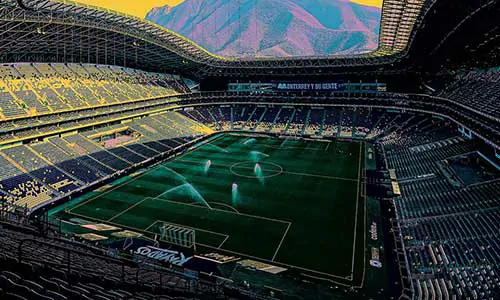
Monterrey Stadium (Estadio BBVA)
Often referred to as “The Steel Giant” due to its striking, flowing metallic exterior, Monterrey Stadium holds 51,243 spectators. The stadium is designed to integrate into the natural surroundings, offering dramatic, panoramic views of the adjacent Cerro de la Silla mountain.
Its intimate seating bowl ensures that fans are close to the action, creating a compact and highly energetic environment that is widely considered one of the most picturesque in the sport.
Guadalajara Stadium (Estadio Akron)
With a capacity of 45,664, Guadalajara Stadium is famous for its distinctive “volcano” design. Its grass-covered outer slopes blend harmoniously with the local landscape, while a floating roof structure provides shade over the stands.
This modern stadium boasts incredible sightlines and is well-known for its vibrant crowd dynamics. It will host several critical group-stage fixtures, carrying the torch of Guadalajara’s proud football history.
5. Canada Venues Analysis
Canada is co-hosting the tournament for the first time in its history. It offers two distinct venues located on opposite coasts, ensuring that the country’s diverse fanbase can experience the magic of the matches firsthand. Below are the key profiles featured in this section of our FIFA World Cup 2026 Stadium Guide: Locations, Capacities and Key Facts.
Toronto Stadium (BMO Field)
Located at Exhibition Place in Toronto, Ontario, this stadium has a confirmed capacity of 43,036 after undergoing physical expansions to meet FIFA standards. It stands as one of the tournament’s most intimate venues, where steep stands keep the crowd close to the pitch.
The stadium is highly accessible via public transit and is situated in a vibrant, walkable neighborhood, offering visitors a pleasant, localized experience. It will host Canada’s historic opening group-stage match.
BC Place Vancouver
BC Place in Vancouver, British Columbia, features a confirmed capacity of 52,497. Located in the heart of downtown, it utilizes a state-of-the-art, cable-supported retractable roof that allows for excellent climate control.
The facility underwent extensive upgrades and has a rich history of hosting major international tournaments, including the 2015 FIFA Women’s World Cup Final. The stunning mountain and ocean backdrops of Vancouver make it a highly desirable destination for travelers.
6. Key Tournament Facts & Match Allocations
To fully grasp the architecture of this tournament, it is useful to review the allocation of key matches. For official announcements, schedules, and ticketing details, you can visit the Official FIFA Website. Additionally, historical records of past tournaments can be explored on the Wikipedia’s 2026 FIFA World Cup Page.
Specifically, the major milestones of the tournament are distributed as follows:
- Opening Match: Hosted on June 11, 2026, at the legendary Mexico City Stadium (Estadio Azteca).
- Most Matches Hosted: Dallas Stadium (AT&T Stadium) in Arlington, Texas, is scheduled to host a total of nine matches.
- The Semifinals: Played at Dallas Stadium (AT&T Stadium) and Atlanta Stadium (Mercedes-Benz Stadium).
- Third-Place Playoff: Hosted at Miami Stadium (Hard Rock Stadium) in Miami Gardens, Florida.
- The Final: Held on July 19, 2026, at the New York New Jersey Stadium (MetLife Stadium).
Therefore, planning travel and analyzing team groupings require careful attention to these locations and their respective time zones.
7. Frequently Asked Questions (FAQ)
Below are some of the most common questions from fans reading the FIFA World Cup 2026 Stadium Guide: Locations, Capacities and Key Facts.
Q1: What is the largest stadium by capacity in the tournament?
A1: Officially, Mexico City Stadium (Estadio Azteca) is the largest venue with a confirmed capacity of 80,824, closely followed by New York New Jersey Stadium at 80,663. However, Dallas Stadium (AT&T Stadium) can scale its configuration to accommodate over 90,000 spectators for certain events.
Q2: Why do some stadiums have different names during the World Cup?
A2: FIFA regulations prohibit commercial sponsorship names on stadiums during the tournament. Consequently, venues like MetLife Stadium are officially referred to as New York New Jersey Stadium, and SoFi Stadium is called Los Angeles Stadium.
Q3: Which stadium is hosting the opening match of the tournament?
A3: The opening match took place at the iconic Mexico City Stadium (Estadio Azteca) in Mexico City on June 11, 2026, making it the first stadium to host three opening matches in tournament history.
Q4: Where will the World Cup Final be played?
A4: The tournament final will be played on July 19, 2026, at the New York New Jersey Stadium (MetLife Stadium) located in East Rutherford, New Jersey.
Q5: How many venues are located in Canada and Mexico?
A5: Out of the 16 host stadiums, Canada features two host venues (Toronto and Vancouver), and Mexico features three host venues (Mexico City, Monterrey, and Guadalajara).
Q6: Which stadium is hosting the highest number of matches?
A6: Dallas Stadium (AT&T Stadium) in Arlington, Texas, is hosting nine matches, the most of any stadium in this edition of the tournament. This includes a crucial semifinal fixture.
8. Conclusion
In summary, the 16 host stadiums representing the United States, Mexico, and Canada showcase a stunning blend of architectural ingenuity, historic legacy, and structural variety. From the high altitude of Estadio Azteca to the retractable roofs in Dallas and Atlanta, players and fans alike will witness a truly diverse landscape of football.
We hope this detailed FIFA World Cup 2026 Stadium Guide: Locations, Capacities and Key Facts has helped clarify the logistics of this expansion edition. As the competition heats up, staying informed on these venues will certainly elevate your viewing experience. We encourage you to bookmark this guide, share it with fellow football fans, and let us know in the comments below which stadium you are most excited to see in action!