False 9 Explained: Role, Tactical Impact and Legendary Players
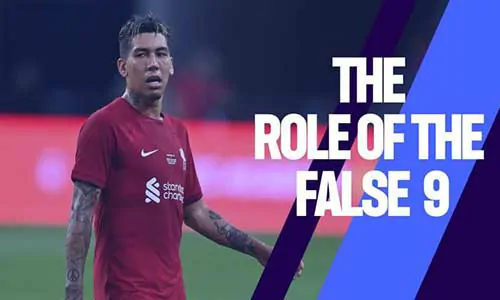
Football is a game of perpetual motion, a tactical chess match played at breakneck speed where space is the ultimate currency. Over the decades, tactical innovations have completely reshaped how we view the pitch. Among these innovations, few roles have sparked as much fascination, confusion, and tactical revolution as the elusive “withdrawn striker.” In this comprehensive tactical guide, we have the False 9 Explained: Role, Tactical Impact and Legendary Players to help you understand how this unique position redefined modern football strategy.
Historically, the number nine was the focal point of the attack—a physical powerhouse who stayed in the penalty box to finish chances. However, the modern game demands fluidity. By dropping deep into midfield, a False 9 disrupts defensive structures, leaving opponents with a critical tactical dilemma. Consequently, this simple movement creates massive spaces for wingers and midfielders to exploit. In this article, we will analyze the mechanics, the history, and the future of this beautiful role.
Table of Contents
- 1. What is a False 9? Defining the Modern Football Maverick
- 2. Why We Need the False 9 Explained: Role, Tactical Impact and Legendary Players
- 3. Mastering the Midfield Overload – False 9 Explained: Role, Tactical Impact and Legendary Players
- 4. The Historical Evolution: From Austria to Rome
- 5. Modern Tactical Masterclasses and Systems
- 6. Historical Greats of the Pitch: False 9 Explained: Role, Tactical Impact and Legendary Players
- 7. How to Defend Against a False 9: The Ultimate Defensive Dilemma
- 8. Conclusion: The Future of the False 9
- 9. Frequently Asked Questions (FAQ)
1. What is a False 9? Defining the Modern Football Maverick
To truly understand the False 9, we must first look at the traditional striker, often referred to as the “Target Man” or “Number 9.” Traditionally, this player is the focal point of the team’s attack. Their job is straightforward: occupy the opposition’s center-backs, win aerial duels, and finish chances inside the penalty box. They play on the shoulder of the last defender, looking to run in behind or hold up the ball for advancing teammates.
Conversely, a False 9 is a player who starts in the center-forward position but consistently drops deep into the midfield. Instead of staying up front to fight physical battles with center-backs, they drag defenders out of position. This movement creates a temporary vacuum in the opponent’s defensive line. Because of this, opposing defenders must decide whether to follow the forward or stay in their defensive zone.
Furthermore, this tactical shift turns a standard attacking shape into a highly fluid system. The False 9 operates in the “half-spaces” and the “space between the lines”—the zone between the opponent’s midfield and defense. In doing so, they function more like an advanced playmaker than a goalscoring forward. As a result, they link play, maintain possession, and orchestrate attacking patterns from deep areas.
2. Why We Need the False 9 Explained: Role, Tactical Impact and Legendary Players
The tactical genius of this role lies in its ability to create chaos through calculated movement. To fully grasp this, let us break down how a False 9 physically alters the defensive spacing of the opposition. When a striker drops into midfield, the opposing center-backs are faced with an incredibly difficult tactical choice.
If a center-back decides to follow the False 9 deep into the midfield, they leave a massive gap in the defensive line. Consequently, fast, inverted wingers can easily exploit this space by making diagonal runs into the empty channel. On the other hand, if the center-backs decide to drop back and hold their defensive line, the False 9 is left completely unmarked. Therefore, they have the time and space to turn, face the defense, and play lethal, defense-splitting passes.
Additionally, the role requires a highly specific skill set. A successful False 9 must possess exceptional spatial awareness, flawless passing ability, and quick acceleration. They must also have the vision of a traditional playmaker and the composure of an elite finisher. Ultimately, this duality makes the system incredibly difficult for defensive coaches to scout and counter effectively.
3. Mastering the Midfield Overload – False 9 Explained: Role, Tactical Impact and Legendary Players
In modern football, dominating the midfield is often the key to winning matches. When a team utilizes a False 9, they naturally create a numerical advantage in central areas of the pitch. For instance, in a standard 4-3-3 formation, both teams have three central midfielders battling for control, creating a balanced 3v3 matchup.
However, when the center-forward drops deep into midfield, that balance is instantly shattered. The team employing the False 9 suddenly enjoys a 4v3 numerical superiority in the center of the pitch. This tactical overload allows the possession-based team to easily play around the opponent’s pressing triggers. Moreover, it gives the team a secure platform to control the tempo of the game and tire out the opposition.
Consequently, this tactical overload creates passing triangles all over the pitch. Because the opponent is outnumbered, their midfielders are forced to shift, which inevitably opens up wider channels for fullbacks and wingers. Thus, the False 9 acts as the ultimate catalyst for positional play, ensuring that the team always has an extra passing option in high-pressure areas.
4. The Historical Evolution: From Austria to Rome
While many fans believe the False 9 is a modern invention created by Pep Guardiola, the roots of this tactical role stretch back nearly a century. Historically, the position was born out of necessity and tactical experimentation. To truly appreciate its modern application, we must first examine its key historical milestones.
The earliest ancestor of the False 9 was Matthias Sindelar, who played for the Austrian “Wunderteam” in the 1930s. Sindelar was physically slight, earning him the nickname “The Paper Man.” Because he could not compete physically with rugged, aggressive defenders, he began dropping deep into midfield to link play. This simple adjustment completely baffled contemporary marking systems of the era.
A few decades later, the legendary Hungarian team of the 1950s—known as the “Mighty Magyars”—refined this concept. Their manager, Gusztáv Sebes, deployed Nándor Hidegkuti as a deep-lying center-forward. During their famous 6-3 victory over England at Wembley in 1953, the English defenders did not know how to handle Hidegkuti’s movement, marking a turning point in football tactics.
In the mid-2000s, Luciano Spalletti revived the role at AS Roma. Due to a severe injury crisis that left the club without any fit strikers, Spalletti deployed the iconic Francesco Totti upfront. Instead of playing as a traditional target man, Totti played as an advanced playmaker who dropped deep to orchestrate attacks. This tactical masterstroke led to Roma playing some of the most attractive football in Europe, laying the modern template for the position.
5. Modern Tactical Masterclasses and Systems
The modern era of football has seen the False 9 become a staple of elite tactical systems. To understand how coaches utilize this role to dominate top-tier matches, it is helpful to contrast the characteristics of a traditional striker with those of a modern False 9.
| Tactical Attribute | Traditional Number 9 | False 9 |
|---|---|---|
| Primary Positioning | Inside the penalty box / on the shoulder of the last defender. | In the half-spaces, dropping between opposition midfield and defense. |
| Main Tactical Objective | Scoring goals, finishing crosses, and holding up physical play. | Creating space, overloading midfield, and linking play. |
| Off-the-Ball Movement | Vertical runs into the penalty box or behind the defense. | Horizontal and vertical dropping movements to drag defenders out. |
| Key Physical Attributes | Height, strength, aerial power, and raw explosive speed. | Agility, balance, low center of gravity, and high stamina. |
| Defensive Pressing Role | Pressuring opposing center-backs and directing play wide. | Cutting off central passing lanes and leading compact pressing. |
As illustrated in the table above, the physical and tactical demands of the two positions are completely different. While the traditional striker relies heavily on physical dominance and explosive movement inside the box, the False 9 relies on spatial intelligence and technical precision.
In modern football, coaches like Pep Guardiola and Jurgen Klopp have used these differences to build highly successful teams. For example, Guardiola’s use of Lionel Messi at Barcelona disrupted the established order of European football. Similarly, Klopp’s deployment of Roberto Firmino at Liverpool allowed players like Mohamed Salah to achieve unprecedented goalscoring numbers from the wing. To explore more about how elite coaches design these tactics, you can study comprehensive tactical guides on The Coaches’ Voice.
6. Historical Greats of the Pitch: False 9 Explained: Role, Tactical Impact and Legendary Players
To fully appreciate this role, we must examine the legendary players who mastered it on the pitch. These players did not just play the position; they defined it for future generations, changing how football clubs build their tactical squads.
Lionel Messi: The Absolute Peak of the False 9
In May 2009, on the eve of a crucial El Clasico match against Real Madrid, Pep Guardiola made a decision that would change football history. He moved Lionel Messi from the right wing to the center-forward position, instructing him to drop deep into the midfield. The result was a historic 6-2 victory for Barcelona.
Messi’s incredible dribbling, quick acceleration, and world-class vision made him the perfect False 9. Opposition center-backs Fabio Cannavaro and Christoph Metzelder did not know whether to step out and mark Messi or drop back. When they stepped out, Messi easily bypassed them; when they stayed back, he combined beautifully with Xavi and Andres Iniesta to dismantle the defense.
Roberto Firmino: The Defensive Workhorse
While Messi represented the creative peak of the position, Roberto Firmino redefined the defensive responsibilities of the False 9 at Liverpool under Jurgen Klopp. Firmino was not a traditional high-scoring forward, but his tactical selflessness was the engine behind Liverpool’s success.
Firmino excelled at pressing opponents from the front, reclaiming possession, and immediately transitioning into attack. When he dropped deep, he dragged opposing defenders with him, leaving massive corridors of space for Sadio Mane and Mohamed Salah to run into. Consequently, Firmino’s off-the-ball movements were directly responsible for Liverpool’s devastating counter-attacks.
Francesco Totti: The Elegant Gladiator
In Italy, the False 9 role is closely associated with Francesco Totti’s brilliant spell at Roma under Luciano Spalletti. Totti possessed the vision of an elite playmaker and the physical presence of a forward. His ability to play first-time passes to overlapping wingers was breathtaking.
By dropping deep, Totti allowed Roma to bypass the aggressive defensive lines of Italian Serie A teams. His intelligence on the ball and clinical finishing earned him the European Golden Shoe in 2007. This achievement proved that a False 9 could be both a primary playmaker and a lethal goalscorer simultaneously.
These players proved that the role requires more than just technical skill; it demands an elite understanding of the game. For official match archives and historical databases of these legendary players, you can explore FIFA’s official website.
7. How to Defend Against a False 9: The Ultimate Defensive Dilemma
As the False 9 became more popular, opposing managers had to develop defensive tactics to counter its effectiveness. Defending against this fluid system requires disciplined team organization and clear communication. There are three main tactical approaches that elite teams use to stop a False 9.
The first approach is utilizing a dedicated defensive midfielder to zonal mark the space between the midfield and defensive lines. Instead of having a center-back step out of the defensive line, the defensive midfielder is tasked with tracking the False 9 as they drop deep. This allows the center-backs to remain in their defensive shape and guard against runs from opposing wingers.
The second approach is employing a compact, low-block defensive system. By keeping the space between the defensive and midfield lines incredibly tight, the defending team denies the False 9 the space they need to turn and face the goal. However, this approach requires immense focus and can lead to the defending team giving up possession for long periods.
The third approach is aggressive, high-line pressing. By pressuring the players who look to pass the ball to the False 9, the defending team can disrupt the supply line entirely. If the midfielders cannot play accurate passes into the feet of the False 9, the entire attacking system breaks down. Nonetheless, this strategy carries a high risk if the opponent manages to break the press.
8. Conclusion: The Future of the False 9
Ultimately, as we have seen in this False 9 Explained: Role, Tactical Impact and Legendary Players guide, football is an ever-evolving game. The position has evolved from an experimental tactic in the 1930s to a defining feature of modern tactical masterclasses. It challenged traditional ideas about positioning, proving that space, not physical structure, is the most important element on a football pitch.
Today, the role continues to adapt. We are seeing the rise of “hybrid” strikers—players like Harry Kane and Karim Benzema who possess the physical dominance of a traditional number nine, combined with the playmaking intelligence of a False 9. This blend of attributes ensures that the principles of the withdrawn forward will continue to shape tactical systems for years to come.
Now, we want to hear from you! Do you think the traditional number nine is making a comeback, or will the False 9 continue to dominate modern tactics? Who is your favorite modern forward? Share your thoughts in the comments below, and don’t forget to share this article with your fellow football fans!
9. Frequently Asked Questions (FAQ)
Q1: What is the main difference between a False 9 and a traditional attacking midfielder (No. 10)?
A1: A False 9 starts the match in the striker position on the team sheet and drops deep during play, dragging defenders out of position. Conversely, an attacking midfielder (No. 10) starts behind the striker and moves forward into the box, looking to find spaces that already exist.
Q2: Why is the position called a “False” 9?
A2: The number nine jersey has historically been worn by the team’s primary, box-bound central striker. The role is called “False 9” because the player wearing or playing in that position does not perform the traditional duties of a striker; instead, they act as a playmaker.
Q3: Can any creative player play as a False 9?
A3: Not necessarily. While creativity is essential, a successful False 9 also needs quick physical acceleration, excellent tactical discipline, a low center of gravity to resist physical pressure from behind, and clinical finishing skills when they do enter the box.
Q4: How did Pep Guardiola revolutionize the False 9 role with Lionel Messi?
A4: Guardiola moved Messi from the wing to the center, instructing him to drop deep into midfield. This overloaded the midfield area, making it impossible for Real Madrid’s central defenders to mark him without destroying their defensive shape, leading to a tactical revolution in European football.
Q5: Is the False 9 role still popular in modern football?
A5: Yes, though it has evolved. Many modern elite teams use hybrid forwards who combine the playmaking abilities of a False 9 with the physical goalscoring presence of a traditional striker, offering greater tactical flexibility during matches.
Q6: How do you counter a team playing with a False 9?
A6: Teams typically counter this role by using a dedicated defensive midfielder to mark the space between the lines, employing a compact low-block defense to deny space, or applying intense high-line pressing to disrupt the passing lanes to the forward.