Estadio Azteca and FIFA World Cup 2026: A Historic Stadium’s New Chapter
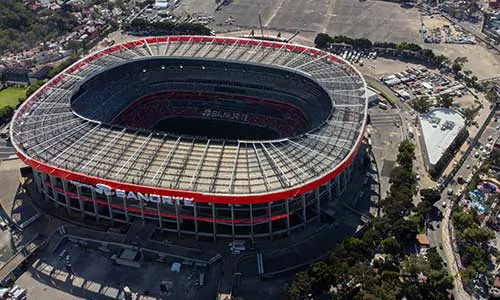
Table of Contents
- 1. The Historical Legacy of the Colossus of Santa Úrsula
- 2. Why This New Chapter Represents a Footballing Milestone
- 3. The Infrastructure Overhaul: Rebuilding a Legend
- 4. Smart Stadium Features and Technical Specifications
- 5. The FIFA World Cup 2026 Match Schedule in Mexico City
- 6. Altitude, Logistics, and Essential Fan Information
- 7. Environmental Sustainability on a Grand Scale
- 8. Frequently Asked Questions (FAQ)
The sports world is witnessing a monumental fusion of history and modern innovation. When we analyze the global expansion of the beautiful game, few venues carry the raw emotional power of this legendary colossus in Mexico City.
Consequently, the latest tournament preparations highlight how classic architecture can adapt to 21st-century requirements. This detailed exploration of the venue showcases why it remains the emotional heartbeat of global football.
Indeed, understanding this transformation is essential for any sports fan or analyst. The ongoing developments surrounding Estadio Azteca and FIFA World Cup 2026: A Historic Stadium’s New Chapter represent a historic milestone for North American sports infrastructure.
Therefore, we must look beyond the concrete and grass to understand the cultural shift occurring within these historic walls. This guide provides an in-depth look at the stadium’s preparation, schedule, and technological evolution.
1. The Historical Legacy of the Colossus of Santa Úrsula
Inaugurated in 1966, this venue was designed by the legendary architect Pedro Ramírez Vázquez. Originally built to establish Mexico as a global sporting powerhouse, the stadium quickly became an architectural marvel capable of holding over 100,000 spectators.
Subsequently, the venue carved its name into international football history during the 1970 tournament. Notably, this was the stage where Pelé led Brazil’s iconic squad to glory, forever cementing his legacy as a global sports icon.
Furthermore, the arena hosted the semi-final match between Italy and West Germany, widely known as the “Game of the Century.” The intense, physical drama of that match set a standard for competitive excellence that few modern stadiums can replicate.
In 1986, history repeated itself when Diego Maradona dominated the tournament on this very same turf. Specifically, it was here that he scored the controversial “Hand of God” goal and the spectacular “Goal of the Century” against England.
Consequently, no other stadium on earth shares such a concentrated density of iconic sporting moments. This deep cultural heritage is exactly why the upcoming tournament is so highly anticipated by fans around the globe.
2. Why Estadio Azteca and FIFA World Cup 2026: A Historic Stadium’s New Chapter Represents an Unprecedented Milestone
To fully grasp the magnitude of this event, one must recognize that hosting three separate World Cup tournaments is an unprecedented achievement. No other sports venue in history has ever been granted this prestigious honor.
Thus, the narrative of Estadio Azteca and FIFA World Cup 2026: A Historic Stadium’s New Chapter is not merely about renovation, but about historical continuity. It connects the romantic eras of Pelé and Maradona with the modern era of highly athletic, data-driven football.
Additionally, this tournament is co-hosted across three nations: Canada, Mexico, and the United States. While many matches are scheduled in ultra-modern American NFL arenas, this Mexican landmark stands out as the historical anchor of the joint bid.
On the other hand, younger fans who only know modern stadiums will get to experience a venue built with traditional values. The unique architectural design ensures that sound echoes and bounces, creating an intimidating wall of noise for opposing teams.
Therefore, the integration of Estadio Azteca and FIFA World Cup 2026: A Historic Stadium’s New Chapter represents a vital bridge between generations. It proves that football’s rich history is actively preserved rather than replaced by steel and glass structures.
As a result, visiting fans will not just be watching a game; they will be stepping into a living, breathing museum. This emotional resonance is something that modern billion-dollar stadiums simply cannot buy or replicate overnight.
3. The Infrastructure Overhaul: Estadio Azteca and FIFA World Cup 2026: A Historic Stadium’s New Chapter
Upgrading a sixty-year-old concrete structure to meet stringent modern FIFA requirements presented immense engineering challenges. Because the venue is so historic, builders had to reinforce the structural foundations without damaging the signature aesthetic of the arena.
Consequently, the project underwent several design phases to balance heritage preservation with modern fan comfort. Ultimately, the total investment rose to approximately $200 million USD to complete the massive structural transformation .
To fund this ambitious endeavor, corporate partnerships played a massive role in the financing. Domestically, the banking giant Banorte acquired the stadium’s naming rights in a landmark deal, investing roughly $117 million USD into the renovations .
Additionally, Televisa’s umbrella firm Ollamani contributed another $85 million USD to ensure the venue reached elite status . This joint effort guaranteed that the physical modernization of the stadium proceeded without major delays or structural compromise.
Importantly, the renovations focused on completely rebuilding the lower bowl and upgrading the VIP hospitality boxes. These premium spaces are designed to host international dignitaries and corporate guests during the high-profile matches .
Furthermore, the players’ tunnel and locker rooms were completely redesigned from scratch. These brand-new facilities now provide a world-class environment for athletes, featuring modern recovery zones, advanced medical rooms, and specialized warm-up areas .
For safety reasons, security screening facilities and access gates were entirely rebuilt. Consequently, accessing Estadio Azteca and FIFA World Cup 2026: A Historic Stadium’s New Chapter is now significantly faster and more secure for international visitors.
4. Upgrades and Technical Achievements: Estadio Azteca and FIFA World Cup 2026: A Historic Stadium’s New Chapter
Beyond the structural foundations, the stadium’s digital and environmental technology required a complete modernization. FIFA’s broadcasting standards demand massive bandwidth and precise lighting to support high-definition global television feeds.
To illustrate this, engineers installed over 21,000 square feet of dynamic LED lighting across the exterior facade . This allows the building to change colors dynamically, transforming the outer structure into a glowing landmark in the Mexico City night sky.
Inside the arena, over 2,200 square meters of high-resolution LED screens were distributed throughout different seating tiers . These displays ensure that every fan, regardless of their seat location, has a clear view of replays and match statistics.
Additionally, modern sports fans expect high-speed connectivity while sharing their experiences on social media. Therefore, tech teams installed over 1,000 Wi-Fi 6 access points inside the seating bowl to handle dense data transmission .
Another major technological achievement is the installation of a state-of-the-art hybrid grass pitch. This surface was engineered specifically for the unique conditions of Estadio Azteca and FIFA World Cup 2026: A Historic Stadium’s New Chapter, combining natural turf with synthetic fibers .
This hybrid pitch provides maximum durability, which is essential because the stadium experiences heavy rainfall during the summer months. The advanced drainage system underneath ensures that the pitch remains in perfect playing condition even during severe tropical downpours.
Furthermore, the venue had to replace its entire traditional lighting system with energy-efficient LED floodlights. Clearly, the path taken by Estadio Azteca and FIFA World Cup 2026: A Historic Stadium’s New Chapter focuses heavily on modern environmental sustainability.
5. The FIFA World Cup 2026 Match Schedule in Mexico City
To understand the scheduling dynamics, fans should note that the stadium is hosting five matches during the tournament. This includes three highly anticipated group stage games, one Round of 32 match, and one Round of 16 clash .
Notably, the opening match of the tournament took place here on June 11, 2026, featuring the host country, Mexico . This match set the tone for the entire global tournament, generating an electric atmosphere across the host nation.
Below is a detailed breakdown of the matches scheduled at the historic venue:
| Date | Fixture / Stage | Local Time (CT) |
|---|---|---|
| Thursday, June 11, 2026 | Mexico 2 – 0 South Africa (Group A Opening Match) | 1:00 PM |
| Wednesday, June 17, 2026 | Uzbekistan vs. Colombia (Group Stage) | 8:00 PM |
| Wednesday, June 24, 2026 | Czechia vs. Mexico (Group A) | 7:00 PM |
| Tuesday, June 30, 2026 | Round of 32 Match | 7:00 PM |
| Sunday, July 5, 2026 | Round of 16 Match | 6:00 PM |
Indeed, the opening match demonstrated the immense success of the early stage of these renovations. This historic match officially inaugurated the story of Estadio Azteca and FIFA World Cup 2026: A Historic Stadium’s New Chapter in front of millions of television viewers.
Consequently, the local host committee worked closely with municipal authorities to ensure smooth crowd flows. This collaboration was crucial for the seamless execution of the matches and the safety of the international fans.
6. Altitude, Logistics, and Essential Fan Information
Visiting Mexico City requires some physical preparation, particularly due to the city’s geographical elevation. The stadium is situated at approximately 7,200 feet (2,200 meters) above sea level, which significantly impacts physical performance .
Specifically, the thin air causes the ball to travel faster through the sky, altering typical game dynamics. Furthermore, visiting athletes and fans may fatigue much quicker than they would at sea level, requiring careful hydration and acclimatization.
Regarding mass transit, the city expanded the light rail connections leading directly to the venue. Therefore, visiting fans can commute to Estadio Azteca and FIFA World Cup 2026: A Historic Stadium’s New Chapter with minimal environmental impact and at a very low cost.
To ensure a smooth matchday experience, fans are advised to follow these practical guidelines:
- Arrive Early: Security lines can be long, so arriving at least 3 hours before kickoff is highly recommended.
- Use Public Transport: The Tren Ligero (Light Rail) links directly to the “Estadio Azteca” station, avoiding heavy road traffic.
- Stay Hydrated: Drinking plenty of water helps combat the immediate physical effects of high altitude.
- Keep Cash Handy: While many vendors inside accept cards, cash is often preferred by local food vendors outside the arena.
Additionally, fans attending the matches will experience completely redesigned premium boxes. These upgrades elevate the general experience of Estadio Azteca and FIFA World Cup 2026: A Historic Stadium’s New Chapter to a world-class level, blending Mexican warmth with premium service.
In contrast to modern, soul-less arenas built from scratch, this venue carries the ghosts of Pelé and Maradona. This rich legacy remains a core element of Estadio Azteca and FIFA World Cup 2026: A Historic Stadium’s New Chapter, making every match feel like an epic event.
7. Environmental Sustainability on a Grand Scale
Preserving a historic structure is fundamentally more sustainable than tearing it down and building a new one from scratch. However, making a 1960s concrete giant eco-friendly required highly innovative engineering solutions.
Specifically, the renovation team integrated advanced rainwater harvesting systems across the massive roof canopy. This system collects heavy seasonal rainfall, filters it, and repurposes it to irrigate the hybrid grass playing surface.
Furthermore, waste management systems have been completely overhauled to meet strict international standards. The stadium has implemented a comprehensive recycling protocol, drastically reducing the amount of single-use plastics during matches.
Ultimately, these efforts prove that historical preservation and ecological responsibility can go hand in hand. Consequently, the stadium serves as a blueprint for other historic venues around the globe looking to modernize responsibly.
8. Frequently Asked Questions (FAQ)
Q1: Why is Estadio Azteca referred to as “Mexico City Stadium” during the World Cup?
Answer: Due to FIFA’s strict guidelines regarding corporate sponsorship, stadiums cannot use their commercial naming rights during the official tournament. Consequently, the venue is officially referred to as the Mexico City Stadium during all World Cup matches .
Q2: What is the official seating capacity of the renovated stadium?
Answer: Following the extensive seating reconfigurations and the addition of brand-new premium boxes, the capacity has been optimized to comfortably host approximately 87,000 to 90,000 spectators .
Q3: How does the high altitude of Mexico City affect the matches?
Answer: Sitting at 7,200 feet (2,200 meters) above sea level, the thin air causes footballs to travel significantly faster through the air. Additionally, players who are not acclimated will experience rapid physical fatigue during intense gameplay .
Q4: How much money was invested in the stadium’s renovation?
Answer: The total renovation cost is estimated at around $200 million USD. This massive project was funded through a combination of corporate sponsorship from Banorte and direct investment from Televisa’s Ollamani .
Q5: What matches are being played at the stadium during the 2026 World Cup?
Answer: The venue is hosting five matches in total. This includes the tournament’s opening match between Mexico and South Africa, two other group stage matches, one Round of 32 knockout match, and one Round of 16 clash .
Q6: How can visiting international fans safely travel to the stadium?
Answer: The safest and most efficient way to reach the stadium is via Mexico City’s public transport network, specifically using the light rail (Tren Ligero) system which connects directly to the Estadio Azteca transit station.
Conclusion
In conclusion, the modernization of this legendary arena is more than a standard construction project. Ultimately, the story of Estadio Azteca and FIFA World Cup 2026: A Historic Stadium’s New Chapter represents an inspiring testament to the beautiful game’s enduring magic.
By upgrading its infrastructure, installing smart technology, and preserving its emotional heritage, Mexico City has secured the stadium’s place in the future of global sports. This venue is now fully prepared to welcome the world once again.
Are you planning to witness history live in Mexico City, or will you be watching the drama unfold from home? To stay updated on stadium preparations and read more about the tournament, check out the official FIFA World Cup Portal or explore Olympics.com’s Stadium Guide.