Box-to-Box Midfielder Explained: Duties, Skills and Tactical Importance
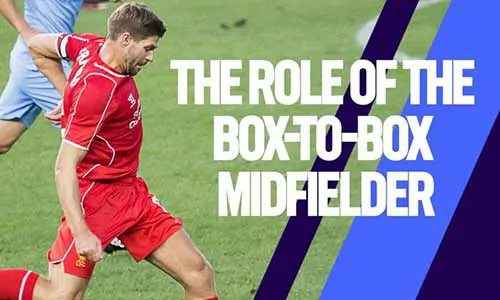
In the high-intensity universe of modern football, few positions are as physically demanding, tactically complex, or universally celebrated as the dynamic central engine. To truly understand how modern matches are won and lost in the center of the pitch, one must study the players who influence both penalty areas. In this comprehensive guide, we offer a complete Box-to-Box Midfielder Explained: Duties, Skills and Tactical Importance analysis to help you understand how these elite athletes dominate games from defense to attack. By examining their unique responsibilities, we can appreciate their invaluable contributions to modern tactical systems.
Table of Contents
- What is a Box-to-Box Midfielder?
- Box-to-Box Midfielder Explained: Duties, Skills and Tactical Importance
- Core Duties: Defending and Attacking in Tandem
- Physical and Technical Attributes: Box-to-Box Midfielder Explained: Duties, Skills and Tactical Importance
- Tactical Systems and Roles: Box-to-Box Midfielder Explained: Duties, Skills and Tactical Importance
- Legendary Figures: Past and Present Masters
- Tactical Comparison: No. 6 vs. No. 8 vs. No. 10
- Frequently Asked Questions (FAQ)
What is a Box-to-Box Midfielder?
Historically referred to as the classic “No. 8,” a box-to-box midfielder is an all-action player whose responsibilities span the entire length of the football pitch. Unlike specialized defensive shields or creative playmakers, this player operates as a functional bridge between the defensive line and the attacking vanguard. They must possess the tactical intelligence to identify danger in their own penalty box and the physical capacity to join the attack in the opponent’s penalty area moments later.
The term itself derives from the literal zones of influence these players command. From their own 18-yard box to the opposition’s 18-yard box, they are responsible for maintaining structural integrity, recovering possession, and catalyzing offensive transitions. Consequently, the box-to-box midfielder represents the ultimate hybrid profile in football, merging physical dominance with exceptional technical skills.
Furthermore, the evolution of modern tactics has only heightened the demand for these multifaceted players. With the rise of high-pressing systems and rapid transitional play, teams can no longer afford passengers in midfield. As a result, having a reliable box-to-box midfielder has become a prerequisite for any squad aiming to control matches and dominate the transition phases of the game.
Box-to-Box Midfielder Explained: Duties, Skills and Tactical Importance
To fully grasp the essence of this role, one must appreciate the sheer variety of tasks assigned to a single player. In this comprehensive Box-to-Box Midfielder Explained: Duties, Skills and Tactical Importance breakdown, we explore how these players maintain tactical equilibrium. They do not have the luxury of focusing on just one phase of play; instead, they are constantly calibrating their positioning based on the state of the ball.
The tactical importance of a box-to-box midfielder cannot be overstated. By acting as a multi-functional engine, they allow managers to achieve tactical flexibility without making substitutions. For instance, when a team is under heavy pressure, this midfielder drops deep to form a low block. Conversely, when the team transitions to an attacking phase, they push forward to create numerical overloads in the final third, leaving opposition defenders in a state of constant dilemma.
In addition, their ability to break opposition lines—either through aggressive vertical carrying or precise progressive passing—is vital for breaking down compact defensive blocks. Without this dynamic presence in the center of the pitch, team play can quickly become predictable, lateral, and easy to defend. Therefore, the box-to-box midfielder serves as both the shield and the sword of a modern tactical system.
Core Duties: Defending and Attacking in Tandem
To operate effectively, an elite box-to-box midfielder must seamlessly divide their energy between two contrasting phases of play. Below, we break down these core duties in detail, illustrating how they impact both ends of the pitch.
Defensive Phase Responsibilities
- Pressing and Counter-Pressing: They act as the primary triggers for high presses, hunting down opponents to regain possession quickly after a turnover.
- Tracking Runners: They must diligently track deep-running opposition midfielders who attempt to exploit space behind the defensive line.
- Interceptions and Tackles: By reading the game effectively, they break up opposition attacks in the middle third through clean tackling and strategic positioning.
- Protecting the Half-Spaces: They provide vital lateral coverage, preventing wingers and attacking midfielders from cutting inside and exploiting gaps between central defenders and full-backs.
Attacking Phase Responsibilities
- Ball Progression: They carry the ball forward through tight spaces, driving past opposition midfields to transition the team from a defensive posture to an offensive one.
- Late Runs Into the Box: By timing their runs perfectly, they arrive late in the penalty area to meet crosses or loose balls, making them exceptionally difficult for central defenders to mark.
- Creating Numerical Overloads: They occupy the half-spaces and link up with wingers and strikers, creating 2v1 or 3v2 situations that destabilize defensive lines.
- Sustaining Attacks: By positioning themselves outside the opposition box, they recover clearances and recycle possession, keeping the pressure firmly on the opponent.
Consequently, balancing these defensive and offensive duties requires an immense amount of tactical discipline. If the midfielder commits forward too early, they risk exposing their team to a counter-attack. On the other hand, if they are too conservative, the strikers will find themselves isolated without adequate support. Striking this perfect balance is what separates good midfielders from world-class legends.
Physical and Technical Attributes: Box-to-Box Midfielder Explained: Duties, Skills and Tactical Importance
To execute such a demanding role, a player must possess a unique cocktail of physical, technical, and mental attributes. In this section of our Box-to-Box Midfielder Explained: Duties, Skills and Tactical Importance analysis, we examine the physiological and skill-based requirements that define the absolute elite in this position.
First and foremost is stamina. An elite box-to-box midfielder will routinely cover between 11 to 13 kilometers per match. This running is not merely jogging; it consists of high-intensity sprints, rapid changes of direction, and physical duels. To sustain this over a grueling 90 minutes, players require exceptional aerobic capacity and rapid recovery rates. Without elite physical conditioning, a player simply cannot fulfill the basic tenets of this position.
Furthermore, technical versatility is highly critical. Since these players operate in crowded central areas, they must possess elite ball-retention skills. According to tactical resources such as Coaches’ Voice, the ability to receive the ball under heavy pressure, shield it using body strength, and turn toward the opposition goal is the hallmark of a world-class midfielder. Below is a comprehensive breakdown of these essential skills:
| Attribute Category | Specific Skill Description | On-Pitch Application |
|---|---|---|
| Physical Power | High VO2 Max, muscular strength, and acceleration. | Winning physical duels, sustaining high-intensity presses, and outrunning opponents over 90 minutes. |
| Technical Control | Exemplary first touch, close control, and spatial scanning. | Navigating congested central areas, evading high presses, and keeping possession under duress. |
| Passing Range | Short combination passes, long diagonals, and line-breaking passes. | Linking play, switching the point of attack, and putting forwards through on goal. |
| Tactical Intelligence | Exceptional spatial awareness, timing of runs, and reading of triggers. | Arriving late in the box to score, intercepting opposition passes, and covering vacated spaces. |
In addition to these skills, mental resilience plays an enormous role. These players are the heartbeat of their teams. They must remain composed when their team is defending a lead and show absolute determination when chasing a game. Consequently, their leadership and work rate often dictate the psychological tone of the entire squad.
Tactical Systems and Roles: Box-to-Box Midfielder Explained: Duties, Skills and Tactical Importance
Modern managers deploy these dynamic engines in various formations, adapting their instructions depending on the team’s overarching philosophy. In this segment of our Box-to-Box Midfielder Explained: Duties, Skills and Tactical Importance tactical study, we explore how they function across different system structures.
The 4-3-3 System: The Dual No. 8s
In a classic 4-3-3 formation, the midfield trio typically consists of one defensive holding midfielder (the No. 6) and two advanced central midfielders (the No. 8s). In this setup, the box-to-box midfielder has the freedom to exploit the half-spaces. While the No. 6 anchors the midfield, the two No. 8s alternate their forward runs. This dynamic structure makes it incredibly difficult for the opposition to mark them, as one midfielder can join the forward line while the other drops deep to help recycle the ball.
The 4-2-3-1 System: The Double Pivot
In a 4-2-3-1 setup, the box-to-box midfielder usually forms half of a double pivot. Here, their role is slightly more disciplined. They partner with a pure defensive midfielder whose main job is to sit in front of the back four. This allows the box-to-box midfielder to act as the primary distributor, carrying the ball forward and linking up with the attacking midfielder (the No. 10), the wingers, and the lone striker. This partnership provides both defensive security and offensive spark.
The Transition Engine
Tactical transition is where the box-to-box player truly shines. During defensive transitions—when the team has just lost the ball—they must immediately counter-press or drop deep to delay the opposition’s counter-attack. Conversely, during offensive transitions, their rapid vertical movement allows them to exploit gaps in the opposition’s unorganized defensive shape. Consequently, they serve as the vital gear that keeps the team’s tactical machine running smoothly in both directions.
Legendary Figures: Past and Present Masters
To truly appreciate the nuance of this position, it is highly beneficial to look at the legendary figures who have defined and refined the role over the decades. These players have set the gold standard for future generations.
Steven Gerrard: The Powerhouse
Steven Gerrard is widely considered the ultimate British box-to-box midfielder. Boasting incredible stamina, an extraordinary passing range, and a ferocious long-range shot, Gerrard could single-handedly drag his team to victory. His defensive work rate was exemplary, yet he was equally capable of scoring 20 goals a season from midfield. His legendary performance in the 2005 Champions League final remains the benchmark for leadership and tactical impact in this position.
Yaya Touré: The Unstoppable Force
During his prime at Manchester City, Yaya Touré redefined what it meant to be a physical presence in midfield. Combining immense physical strength with delicate technical grace, Touré could collect the ball deep in his own half and power through three or four challenges before slotting the ball into the top corner. His ability to dominate the midfield physically and technically made him one of the most feared players in Premier League history.
Jude Bellingham: The Modern Evolution
In the contemporary era, Jude Bellingham represents the evolution of the hybrid midfielder. Possessing the spatial intelligence of a veteran and the physical capabilities of an elite athlete, Bellingham operates comfortably in every zone of the pitch. Under the tactical guidance of elite managers, he has shown an incredible ability to defend deeply, progress the ball with elite composure, and score crucial goals. His versatility makes him the quintessential modern box-to-box star.
To learn more about how legendary managers utilize these world-class talents to dominate European football, explore UEFA’s official tactical insights, which regularly break down the tactical systems of top-tier teams.
Tactical Comparison: No. 6 vs. No. 8 vs. No. 10
To prevent tactical confusion, it is essential to distinguish between the three primary midfield roles. While they often occupy similar areas of the pitch, their tactical objectives and primary zones of influence differ significantly.
| Feature / Role | Defensive Midfielder (No. 6) | Box-to-Box Midfielder (No. 8) | Attacking Midfielder (No. 10) |
|---|---|---|---|
| Primary Objective | Protect defense, recycle possession. | Link defense to attack, influence both boxes. | Create goalscoring opportunities, score goals. |
| Zone of Influence | Lower third, in front of center-backs. | Entire pitch (box-to-box). | Final third, between opposition lines. |
| Defensive Output | Extremely High (Tackles, interceptions, blocks). | High (Pressing, tracking back, recovering balls). | Low to Moderate (Basic pressing, blocking lanes). |
| Attacking Output | Low (Sustained passing, rare long-range shots). | High (Late runs, key passes, direct assists). | Extremely High (Dribbles, assists, shots on target). |
As illustrated by the comparison table, the box-to-box midfielder is the most balanced player on the pitch. They do not specialize in one specific area; rather, they serve as the glue that keeps the team cohesive, functional, and balanced across all phases of the match.
Frequently Asked Questions (FAQ)
To help deepen your understanding, we have compiled and answered the most common questions regarding this pivotal midfield role.
1. What is the difference between a box-to-box midfielder and a deep-lying playmaker?
While a box-to-box midfielder relies on physical athleticism to cover the entire pitch and join the attack directly, a deep-lying playmaker (like Andrea Pirlo or deep-lying Toni Kroos) remains in a deeper, more static position. They use exceptional passing vision and tempo control to dictate the game from deep, rather than making physical runs into the opponent’s box.
2. Why is the box-to-box midfielder traditionally called a “No. 8”?
In traditional line-up numbering, the No. 6 was the defensive midfielder, the No. 10 was the creative playmaker, and the No. 8 sat between them. Over time, the “No. 8” became synonymous with the all-action, box-to-box midfielder who links these two roles together through high work rate and tactical flexibility.
3. Do modern tactical systems still use traditional box-to-box midfielders?
Yes, but they have evolved. Modern tactical setups require them to be much more positionally fluid. Instead of just running straight up and down the pitch, they are now expected to occupy specific half-spaces, rotate with full-backs, and participate in complex counter-pressing structures. The physical and technical requirements are higher than ever before.
4. What are the most important training drills to develop this role?
Aspiring players should focus on high-intensity interval training (HIIT) to build stamina. Technically, practicing transition-based drills, small-sided possession games (rondos under pressure), and shooting after late runs from midfield will significantly improve their box-to-box efficiency.
5. Can a team play with two box-to-box midfielders simultaneously?
Absolutely. Many successful teams utilize a 4-3-3 formation with two dynamic No. 8s. However, they must communicate constantly and coordinate their movements. If both midfielders run forward at the same time, they leave the holding midfielder isolated and the team vulnerable to rapid counter-attacks.
Conclusion: The Ultimate Tactical Catalyst
In summary, the box-to-box midfielder remains one of the most vital components of any successful football team. By combining relentless stamina with elite technical control, defensive grit, and attacking flair, these players provide the tactical balance that allows managers to implement their complex modern systems. Whether they are tracking back to make a crucial block or arriving late to score a match-winning goal, their influence is felt in every single minute of play.
As football tactics continue to evolve, the demand for versatile, multi-functional players will only increase. Developing a comprehensive understanding of this role is crucial for players, coaches, and passionate fans alike. What is your favorite era of the box-to-box midfielder? Let us know your thoughts, and feel free to share this detailed analysis with fellow football enthusiasts!