BMO Field World Cup 2026 Upgrades: How Toronto Is Preparing for FIFA
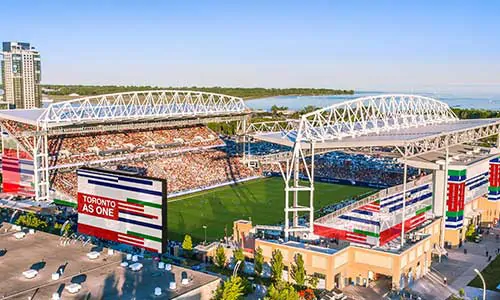
Table of Contents
- 1. Introduction: Toronto Takes the Global Stage
- 2. The Timeline and Scope of the Renovation
- 3. Seating and Capacity Expansion
- 4. The State-of-the-Art Hybrid Pitch
- 5. Elite Dressing Rooms and Media Zones
- 6. Transit and Municipal Infrastructure
- 7. Testing the Infrastructure: The Inter Miami Match
- 8. Comparing Toronto Stadium to Other Venues
- 9. The Post-World Cup Legacy
- 10. Frequently Asked Questions
The global sports community has turned its focus to North America, and Toronto is right at the center of the action. As one of the selected host cities for the historic FIFA World Cup, the city is ready to welcome soccer fans from every corner of the globe. However, preparing a municipally owned stadium for the planet’s biggest sporting event is no small feat.
Consequently, the city’s primary venue has undergone a massive structural and technical evolution. The comprehensive BMO Field World Cup 2026 Upgrades: How Toronto Is Preparing for FIFA project represents a landmark collaboration between public and private partners. This initiative ensures the stadium meets strict international guidelines while preserving its intimate atmosphere.
Historically known as BMO Field, the venue will operate under the official name “Toronto Stadium” during the tournament to comply with FIFA’s commercial regulations. With a budget exceeding $146 million, the upgrades have successfully modernized the stadium’s seating, pitch, technology, and local transit access. This article explores how these developments came together to create a world-class venue.
The Construction Timeline of BMO Field World Cup 2026 Upgrades: How Toronto Is Preparing for FIFA
Executing a renovation of this magnitude requires meticulous planning and phased execution. Because the stadium is the active home of both Toronto FC (MLS) and the Toronto Argonauts (CFL), halting all operations was not an option. Therefore, the City of Toronto and Maple Leaf Sports & Entertainment (MLSE) designed a two-phase construction cycle.
The first phase of the renovation commenced in December 2024 and wrapped up in September 2025. During this initial period, construction crews focused on building the invisible backbone of the venue. This included upgrading subterranean broadcast cabling, overhauling the public address systems, and installing high-definition LED sports lighting.
Additionally, workers retrofitted many of the main concourses and food services to handle higher spectator volumes. By scheduling this heavy infrastructure work during the winter offseason and playing through the summer, MLSE minimized disruptions to the domestic MLS and CFL schedules.
The second phase, running from September 2025 through March 2026, introduced tournament-specific changes. During this phase, the iconic temporary stands began rising above the north and south ends. This phase also saw the installation of advanced team facilities and a completely redesigned hybrid pitch. These dual phases show the strategic nature of the BMO Field World Cup 2026 Upgrades: How Toronto Is Preparing for FIFA project.
Ultimately, the coordinated effort between municipal planners and engineering teams allowed the project to finish on schedule. Consequently, the stadium was fully certified and ready for operation well ahead of the opening match.
Seating and Capacity Expansion: BMO Field World Cup 2026 Upgrades: How Toronto Is Preparing for FIFA
One of the most notable hurdles for Toronto was meeting FIFA’s mandatory minimum seating capacity. To host tournament matches, a stadium must accommodate at least 45,000 spectators. Since the venue’s standard capacity sat around 28,000, a major seating overhaul was required.
Specifically, engineers added exactly 17,756 temporary seats to bridge the gap. This brings the total official capacity for the World Cup matches to 45,736 seats. Most of these temporary seats were integrated into the north and south ends of the stadium, dramatically changing its architectural profile.
| Stadium Feature | Pre-Upgrade State | Post-Upgrade (World Cup) State |
|---|---|---|
| Seating Capacity | ~28,000 seats | 45,736 seats |
| Playing Surface | Standard Natural Grass | Stitched Hybrid Turf System |
| Broadcast Capabilities | Standard MLS Production Setup | FIFA-compliant UHD Cable Networks |
| Hospitality Spaces | Standard Premium Club Suites | Expanded VIP Lounges & Viewing Decks |
Furthermore, early concerns regarding the comfort and sturdiness of these structures were quickly dispelled. Planners selected highly durable, premium-grade steel scaffolding systems. This approach ensures that the temporary stands feel as solid and secure as the permanent concrete foundations.
When studying the BMO Field World Cup 2026 Upgrades: How Toronto Is Preparing for FIFA, we can see how temporary seating provides a sustainable solution. By using temporary seating instead of permanent concrete expansions, the city avoids leaving behind a “white elephant” stadium. After the tournament, the stadium can easily scale back to its standard footprint, preserving the venue’s long-term financial viability.
In addition to the sheer volume of seats, the upgrades also address modern accessibility standards. New ramps, dedicated wheelchair platforms, and improved wayfinding signage have been integrated seamlessly. Consequently, fans of all physical abilities can enjoy a comfortable, world-class viewing experience.
The State-of-the-Art Hybrid Pitch
At the heart of any successful FIFA venue is the playing surface. FIFA enforces incredibly strict pitch quality guidelines to protect elite athletes from injuries and ensure consistent ball physics. To meet these standards, the stadium’s grass was completely overhauled.
Specifically, crews installed a new hybrid-stitched grass playing surface. This advanced system combines 95% natural Kentucky bluegrass with millions of synthetic turf fibers stitched deep into the root zone. These synthetic fibers anchor the natural grass, preventing the turf from shearing during intense matches.
Moreover, a sophisticated undersoil heating and drainage system was integrated. This ensures the pitch remains playable during heavy rainstorms or unexpected cold snaps. Water can drain away at a rapid rate, preventing the formation of mud patches and standing water on the field.
Due to the dual-use nature of the stadium, the hybrid surface is a major asset. Because both football and soccer players compete here, the turf experiences significant wear and tear. The hybrid system offers superior recovery times, ensuring the pitch remains immaculate throughout the tournament.
Elite Dressing Rooms and Media Zones
Beyond what the fans see, the tournament demands world-class facilities for players, officials, and media representatives. The BMO Field World Cup 2026 Upgrades: How Toronto Is Preparing for FIFA project took this into account by entirely rebuilding the inner corridors of the stadium.
To begin with, the home and away dressing rooms were expanded and modernized. They now feature individual player recovery pods, advanced medical treatment areas, and state-of-the-art tactical briefing rooms. These spaces match the quality of top-tier European club facilities, providing an optimal environment for preparing teams.
In addition, broadcast and media facilities underwent a significant expansion. A larger, state-of-the-art press box was built to house hundreds of international journalists. Engineers also constructed extensive broadcast compounds outside the stadium to support high-definition satellite trucks and production crews.
Consequently, the matches hosted in Toronto will be broadcast around the globe with crystal-clear visual quality. New fiber-optic cabling running throughout the venue ensures zero latency, meeting the highest modern broadcasting standards.
Transit and Infrastructure: BMO Field World Cup 2026 Upgrades: How Toronto Is Preparing for FIFA
Hosting tens of thousands of international visitors presents a massive transport challenge. Because Exhibition Place is located just west of downtown, moving crowds quickly and safely is a major priority for city planners.
Therefore, Metrolinx and the Toronto Transit Commission (TTC) have implemented sweeping transit upgrades. The Exhibition GO Station, situated right next to the stadium, received significant platform upgrades. These upgrades allow the regional rail system to handle much larger, more frequent train arrivals with ease.
Additionally, dedicated shuttle lanes and enhanced streetcar services will run from Union Station directly to the venue. The city has also established extensive pedestrian pathways and active transportation corridors, encouraging fans to walk or bike to the games.
In analyzing the BMO Field World Cup 2026 Upgrades: How Toronto Is Preparing for FIFA, we see that transit integration is vital for reducing traffic congestion. Local authorities are urging fans to leave their personal vehicles at home, pointing out that public transit is the fastest and most sustainable way to reach the stadium.
Furthermore, safety barricades and secure checkpoints have been established around the Exhibition Place precinct. This creates a secure, pedestrian-friendly fan zone where ticket holders can gather, socialize, and enjoy pre-match festivities without worrying about local traffic.
Testing the Infrastructure: The Inter Miami Match
Before welcoming the global community, Toronto needed a real-world test to validate the stadium’s structural changes. On May 9, 2026, Toronto FC hosted Inter Miami in a highly anticipated MLS match. With global superstar Lionel Messi in town, demand for tickets was unprecedented.
This match served as the ultimate test run for the new stadium configurations. MLSE opened the newly constructed temporary stands to the public for the first time, drawing a record-breaking crowd of over 44,000 fans.
Crucially, the event was a resounding success. Fans seated in the temporary structures reported that the stands felt incredibly stable and sturdy, with no movement or swaying. Additionally, sightlines from the upper decks were highly praised, providing clear views of the entire pitch.
As a result, municipal planners gathered valuable data regarding crowd movement, stadium exit times, and transit performance. This real-world test confirmed that the BMO Field World Cup 2026 Upgrades: How Toronto Is Preparing for FIFA was a structural success, proving the stadium’s readiness.
Comparing Toronto Stadium to Other Venues
During the tournament, Toronto’s stadium will be the smallest venue by seating capacity. While massive arenas like MetLife Stadium in New Jersey or Estadio Azteca in Mexico City can hold over 80,000 fans, Toronto focuses on intimacy.
However, being the smallest venue is actually a major advantage. The close proximity of the stands to the pitch creates an incredibly loud, electric atmosphere. Unlike massive multi-purpose NFL stadiums, the soccer-specific design ensures that fans are right on top of the action.
Moreover, the intimate setting provides a highly unique television viewing experience. Broadcasters will capture the raw energy of the fans, making every match feel intense and personal. This shows that bigger is not always better, and Toronto’s venue brings a unique charm to the global stage.
The Post-World Cup Legacy
One of the most impressive aspects of the BMO Field World Cup 2026 Upgrades: How Toronto Is Preparing for FIFA is the long-term legacy planning. While the temporary seating will be removed after the tournament, many of the upgrades are permanent.
Specifically, the permanent upgrades include the state-of-the-art hybrid pitch, the modernized dressing rooms, expanded premium suites, and transit upgrades. These permanent enhancements will benefit Toronto FC, the Toronto Argonauts, and the local community for decades to come.
Additionally, the financial investments have stimulated the local economy, creating construction jobs and boosting tourism. By investing in scalable, sustainable architecture, Toronto has created a blueprint for future host cities looking to host global sporting events without accumulating massive debt.
To learn more about the city’s tournament preparations, you can read the official City of Toronto World Cup Page. For general tournament schedules and updates, visit the official FIFA World Cup Website.
Frequently Asked Questions
What are the BMO Field World Cup 2026 Upgrades: How Toronto Is Preparing for FIFA?
These upgrades include a $146M renovation project that added 17,756 temporary seats, installed a hybrid-stitched grass pitch, upgraded player facilities, and modernized broadcast systems.
Why is BMO Field being called Toronto Stadium?
To comply with FIFA’s commercial and non-sponsor naming guidelines, all sponsored venue names are temporarily replaced with geographic names during the tournament.
What is the final capacity of the stadium for the tournament?
With the installation of temporary seating, the stadium’s capacity has increased from approximately 28,000 to 45,736 seats.
What is a hybrid pitch, and why was it installed?
A hybrid pitch combines 95% natural grass with stitched synthetic fibers. It offers maximum durability and faster recovery times under heavy playing conditions.
What will happen to the temporary seats after the tournament?
The temporary seats will be dismantled and repurposed, allowing the venue to scale back to its standard capacity for local events.
How do I get to Toronto Stadium during the World Cup?
Fans are highly encouraged to use public transit. The Exhibition GO Station and local TTC streetcar routes provide direct access to the venue.
Conclusion
In summary, the BMO Field World Cup 2026 Upgrades: How Toronto Is Preparing for FIFA represent a major milestone in Canadian sports history. Through careful phasing, structural engineering, and sustainable design, Toronto has created a world-class environment for fans and players alike.
Whether you are a local fan or an international traveler, Toronto Stadium is ready to deliver an unforgettable tournament experience. Are you planning to attend any of the tournament matches in Toronto? Leave a comment below and share your thoughts on the venue’s massive upgrades!